Peace Corps - Weather, Training, Music and More
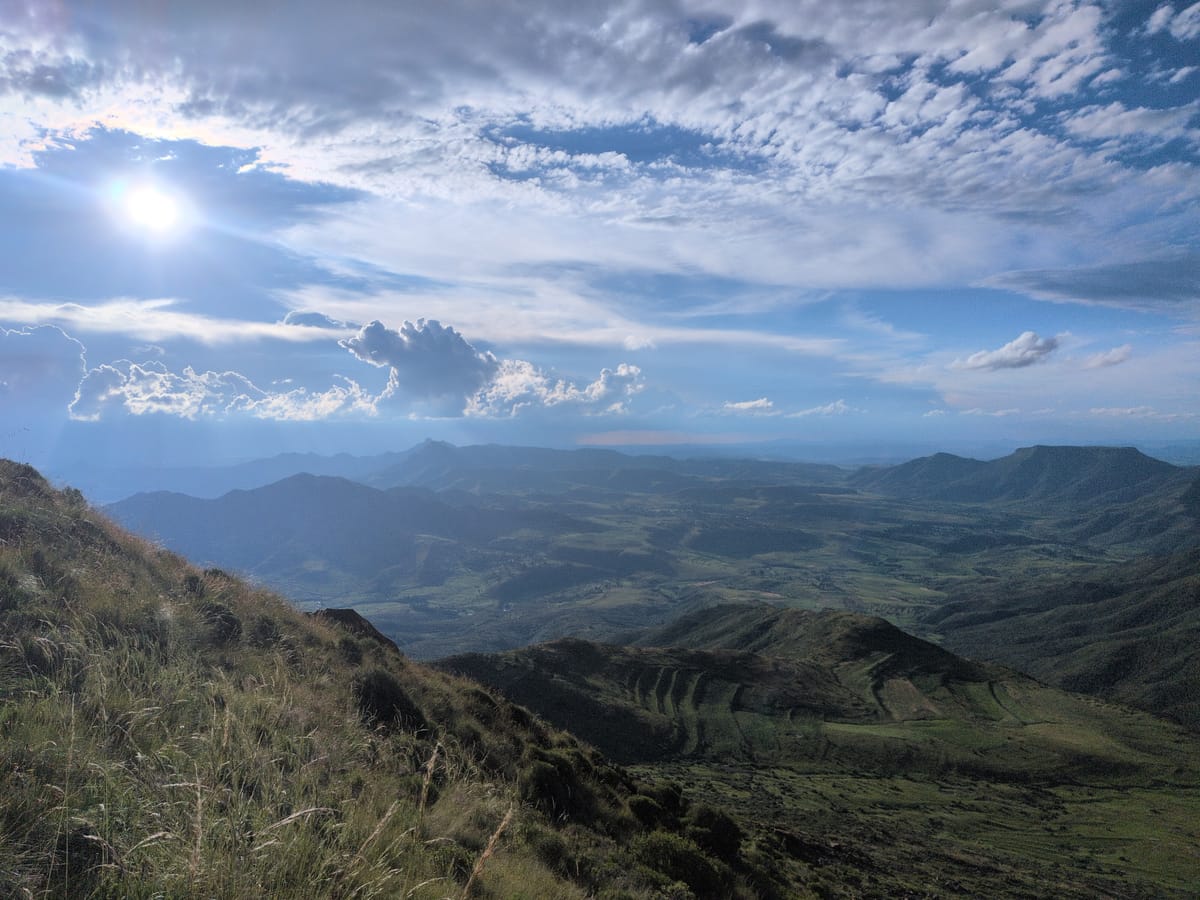
It's time for another one of these. And it's hard to believe that it's over a month since I last wrote! The time flies, in hindsight, likely because now that my routine is more settled and stable, the days mesh together endlessly.
It's hard to believe that its been frigidly cold in the US, since I'm currently enduring midsummer. Which isn't too hot, compared to back home; maybe a high of 70-80 degrees everyday. Lately we have been getting LOTS of rain, and crazy thunder and heat lightning storms. The rain often comes in short spurts, or downpours, while the midday sun usually clears the clouds and peaks through by noon. But other days are permanently overcast and bring showers throughout.
The thunder is... unbelievable. It often sounds like a bomb going off, and rattles the ground and walls. I always sleep with earplugs, which are literally construction grade, designed for jackhammering and jet engines, and even through those the thunder is loud! Apparently the mountains funnel the sound energy together, creating louder shockwaves. Perhaps the altitude is also a factor, as if we live closer to the storms, I'm not sure. On one memorable night, the thunder kept up continuously for 30+ minutes; just a constant roll and rumble all around you.
Equally wild is the lightning. There is lots of heat lightning, and because the ambient light in my community is so low, it creates a silent, strobe-like effect through the windows at night. A free light show!
Besides enjoying the weather and working at the clinic, I have lots of free time. Right now, most of that excess energy is being funnelled into marathon training! While I'm no stranger to the 26.2 mile distance, this time it'll be through the mountains, almost entirely on dirt, gravel, and grass. My planned route takes me from my camp town, Roma, to a fellow Peace Corps Volunteer's site, where I will visit and spend the weekend recovering. I have two more big runs in my sight to train for while I live here; a 54 mile ultra and a 104 mile ultra, which both similarly end at different volunteer sites. But those are for another time. None of these "races" are really races, just me going running following a route I created. For the love of running, adventure, and challenge I suppose.
In addition to running in the morning 7x per week, up and down or around the mountains, I am also lifting 5x in the afternoon on the easier days. It's my first time where I'm training like a "hybrid athlete" and it's very fun, but equally tiring and time consuming. But it'll be good to have such a solid base of fitness if/when I attempt to climb Kilimanjaro or complete the 130 mile Drakensberg Traverse.
I did an overnight hike with my friend, Marlon, which turned into quite the adventure. We climbed Thaba li-mele, a nearby spiky peak, and cooked food atop via a fire. We were planning to sleep on the summit, but a huge thunder and lightning storm rolled in. We tried to wait it out, but since the summit was all rock, and therefore our tent wasn't well staked town, it was near collapsing as we huddled inside of it. We decided to break camp and head down in the rain, instead of stay at the highest point during a lightning storm. So, now we had to find a new place to sleep, since we were already exhausted from the climb up.
Luckily there was a nearby high-altitude village (7500 feet above sea level). We strolled in that night and I explained to someone what happened in the best Sesotho I could manage. That person ended up getting the village chief to decide what to do with us. He found us a ronduval to stay in that no one was using that night, complete with a bed and bedding. I later found out that its very uncommon for chiefs to let outsiders stay in their village unannounced. But since we spoke Sesotho, lived and worked in Lesotho, he found us someone in the village who owed one of us a "debt", of sorts. Since the man who we stayed with was an ART patient at my clinic, that was considered the "debt". The Basotho hospitality never disappoints. It was an amazingly adventurous day and night.
If you've ever eaten a meal with me, you know that I eat a shit-ton of food. And here is no exception, especially with all the training. My diet is primarily eggs, oats/rice/papa, mounds of nuts, canned tuna/sardines, braai chicken, lots of beans, fresh fruits from nearby trees (apples, nectarines, peaches, plums), and a protein shake post workout. Besides onions/carrots/peppers and sometimes tomatoes, fresh vegetables are lacking. But there aren't really storage options in the summer heat; we will see what winter brings.
Yesterday I went to Roma to restock on food, and got three weeks worth for ~1300 rand ($76 USD). I then carried it back to site in my backpack (~45 lbs). These food rucks have become part of my training routine. I put a picture below of the food haul, so you can see!
I now also have a Sesotho tutor via the local primary school. We meet once a week for two hours, and basically speak only Sesotho the entire time. Right now I'm fairly capable with speaking Sesotho, but my biggest weakness is understanding native speakers; they speak "fast" (which is really just normal speed) and have different accents that throw me off. So my teacher talks and I listen and try to understand, asking clarification questions first in Sesotho then in English if needed.
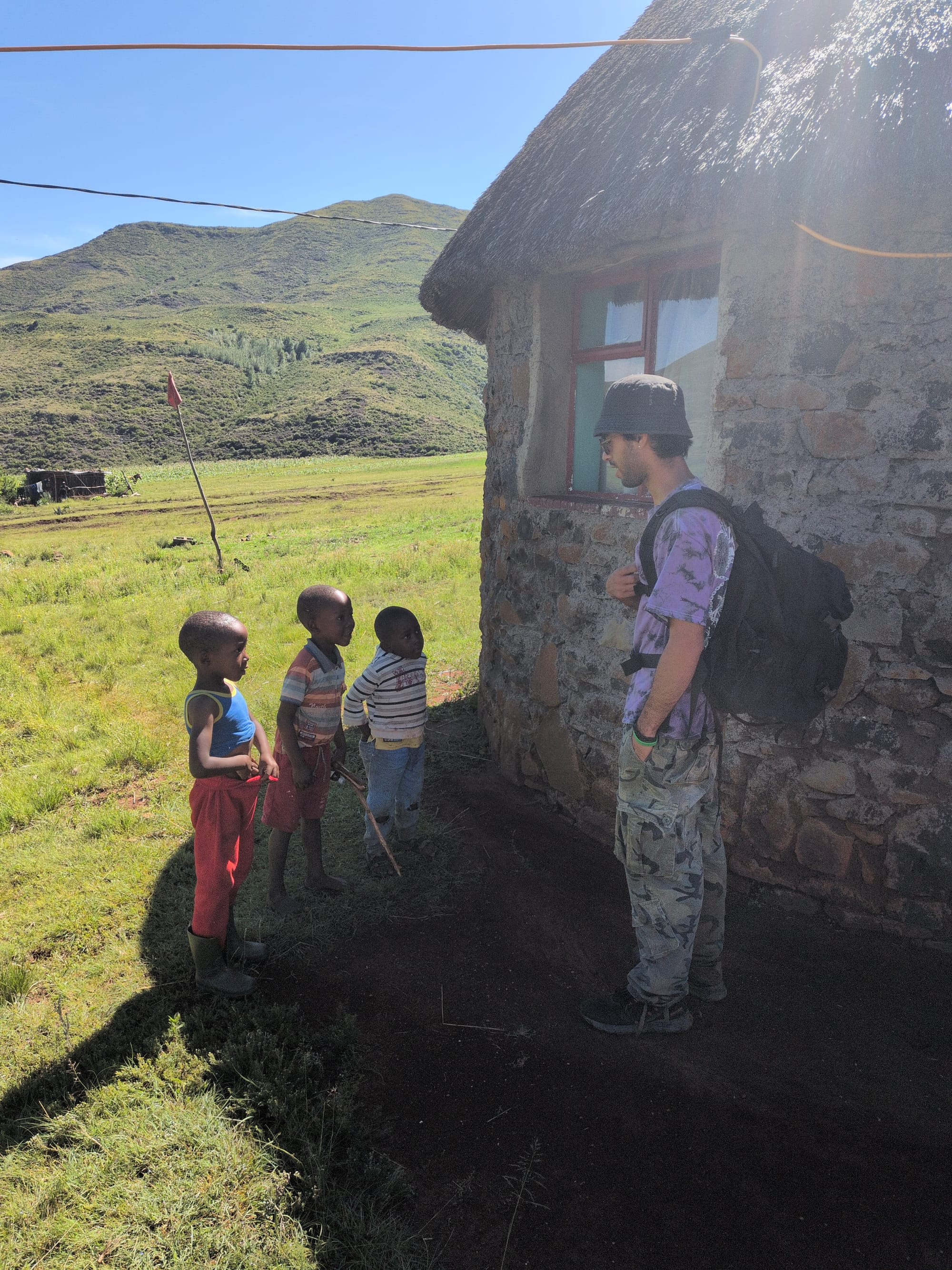
Usually our sessions are interrupted towards the end by local kids, who come to ask me questions they have, in English. So far I've demonstrated how to find the area of a circle, and given them the English word for that device you use to measure temperature: the thermometer! It's funny, because my Sesotho teacher kept saying "laboratory thermometer", and I explained to her that no one says that, its just "thermometer" in casual English conversation. They also thought there might be two different words for thermometer, one for the device you put in your mouth and one for weather outside. So I explained that we use thermometer in both cases, and it's understood by context: "I think I'm sick, where's the thermometer?", or "Today it's very hot, check the thermometer."
Recently, many of the initiation schools have been ending, and the participants are returning from the mountains to the villages. They come wearing awesome outfits covered head-to-toe in red or white paint (males or females, respectively). Male and female schools are separate and each perform dances, songs, skits, and performances that were often created while they were in the mountains. The nearby female school came and performed outside the clinic last Friday, and it was very cool; many people gathered to watch and give donations (usually money) to the initiates. Yesterday, the male school returned and featured a similar celebration, but with more initiates (maybe 20) and hundreds of people onlooking. I got a LOT of attention for being there, since I was the first lekhooa (lay-who-wa, white person) to attend the celebration in 10+ years.
Also, the initiates aren't always youth; there is a wide age range of attendees of initiation schools, usually between age 16-40 years. The female graduates were all adults, for instance. Additionally, what is done, or taught, during the schools is largely shrouded in mystery and here say. Some people espouse that the schools are borderline cults, with ritualistic cutting of the arms/hands and stick fighting. But others say its nothing more than men or women hanging out in the mountains together for a few months. The truth is likely somewhere in between. What does seem to be widely held as true is that many men get circumcised during their initiation. I've also been told that for those who attend already circumcised, they cut off a small tip of one of your fingers in fairness to those others.
While this may all sound barbaric and primitive to you Americans, its mainly a celebration of Basotho culture and customs. Plus, the schools are not mandatory, require an attendance fee, and most Basotho don't ever go. If I was to draw any semblance of comparison to the United States, it kind of reminds me of Navy Seals training, except the end goal is creating art and celebrating culture, instead of war and killing (Lesotho is a very peaceful country).
Lastly, I would like to share some music with you. Amapiano is the most popular genre in Lesotho. It's from South Africa, and is akin to dance/house music with a slower tempo and ethereal vocals. It's amazing, beautiful music, played in every taxi, and definitely what I listen to most here.
There is the euphoric vocals of Bengicela, the groving dance house track Shela, the highly played Abantwana Bakho (which some consider to be the "Song of 2025"), or the calm deep grooves of Iphupho by Kabza de Small (widely considered the pioneer of Amapiano). Anything by the "Amapiano Kings" (as my friend and coworker calls them) is great: Kabza de Small, DJ Maphorisa, JAZZWRLD, Kevin Momo, Sam Deep. The lyrics are usually in Zulu, a popular language in South Africa, so I cannot understand them; but my coworkers translate sometimes, since Zulu and Sesotho are both Bantu languages and thus share many patterns and words. Here is a playlist, with my most favorite songs towards the top.
There is one Lesotho song I hear often, called "Hohle ke Lesotho" by Cityzeen LS, which I can understand, and is practically a national anthem. The song title means "Lesotho is Everywhere" or "Everywhere is Lesotho" if translated directly.
Other than all of that, I am doing very well mentally. Everyday my community feels more like home, and I have many events to look forward to, such as Peace Corps Phase 3 training in March and a vacation with friends to Durban, South Africa, in April.
Thank you for reading and for your continued support and questions. It brings me great joy to hear, through my parents, how much people are enjoying these updates.
Stay well,
Abuti Bohlokoa Masenyetse
(Ah-boo-tee Boo-hlo-kwa Ma-sin-yey-see)
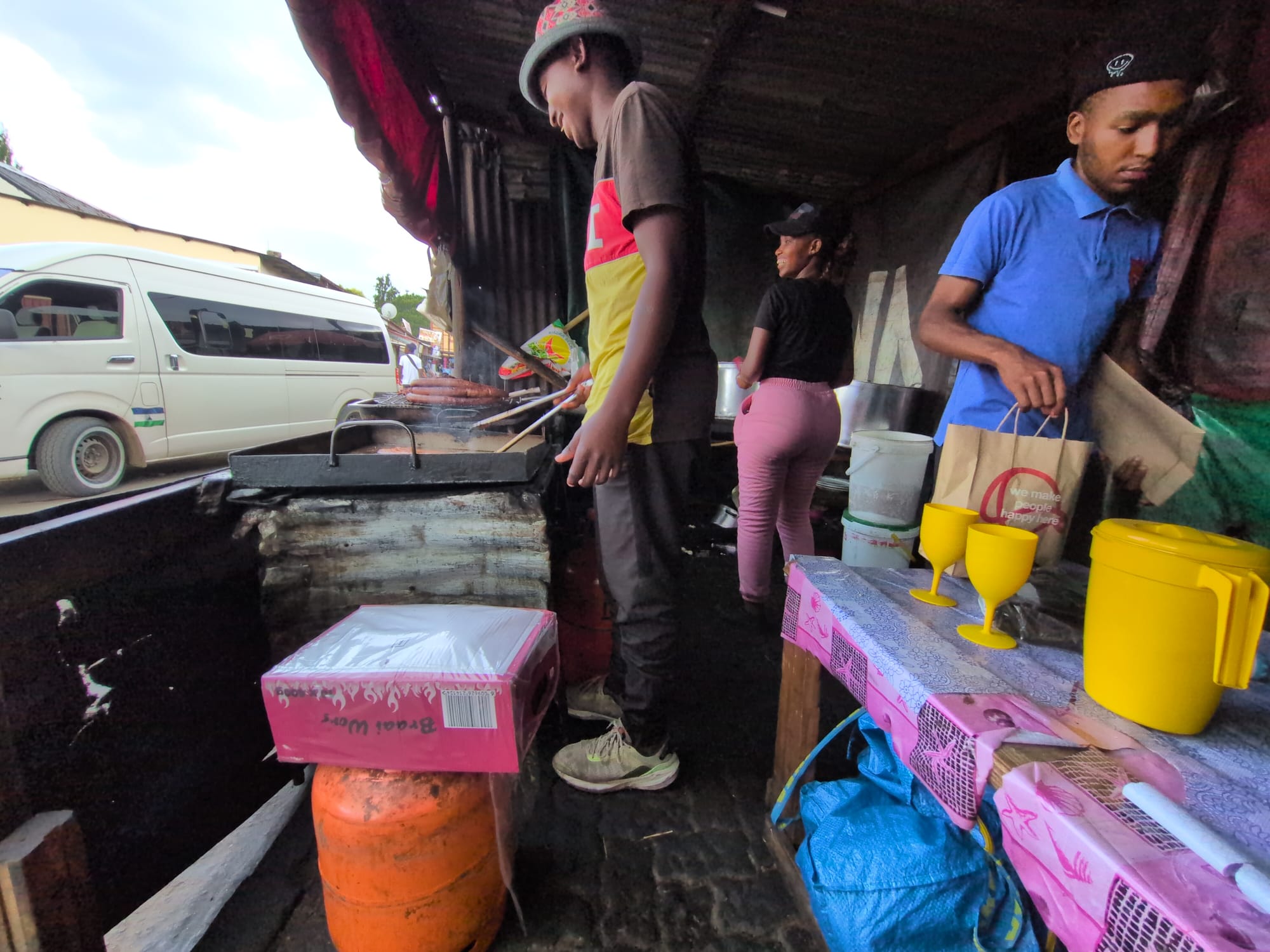
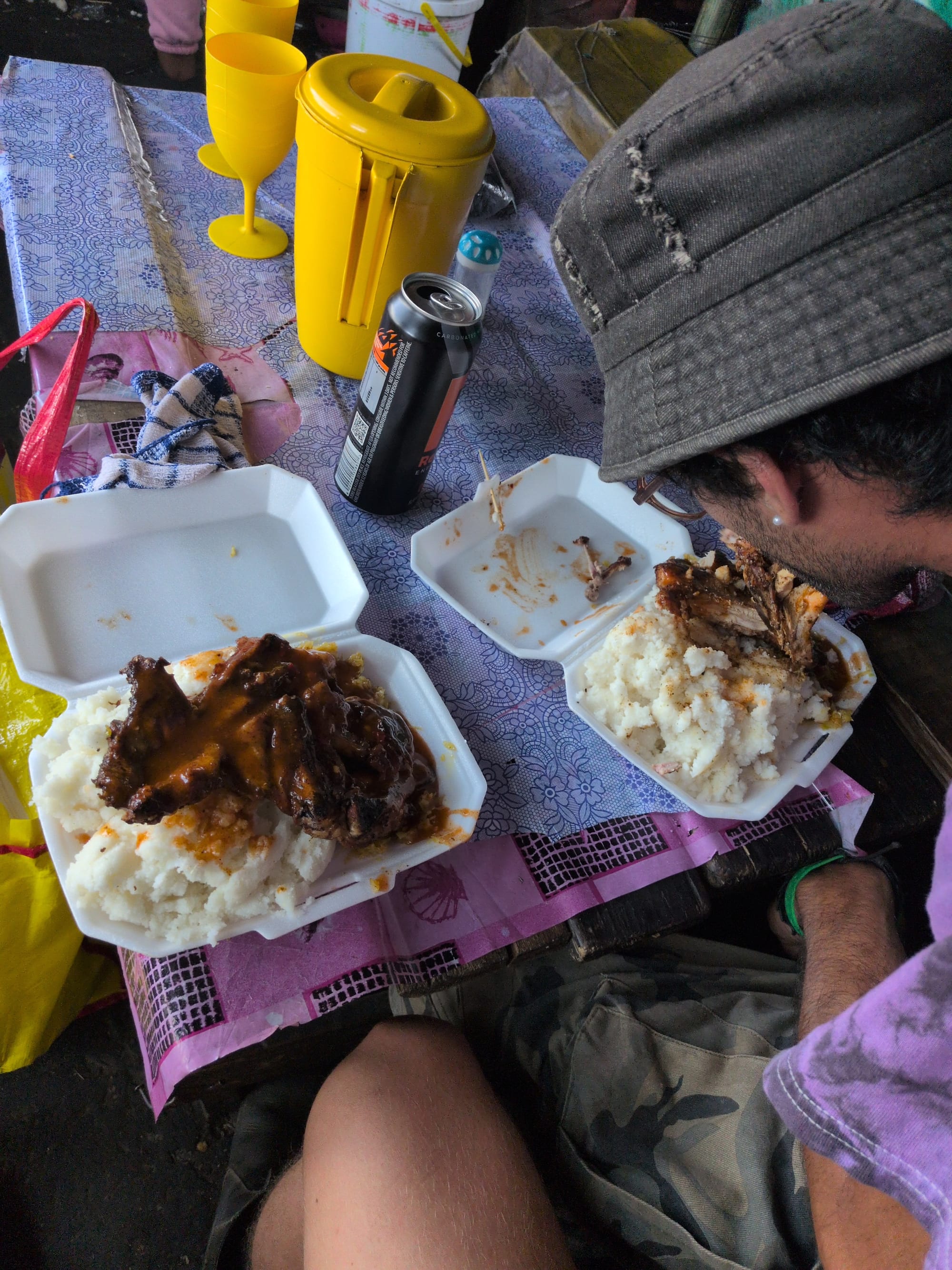
Getting $2/plate street food in Maseru with Marlon. Just casually some of the best chicken I've ever had.
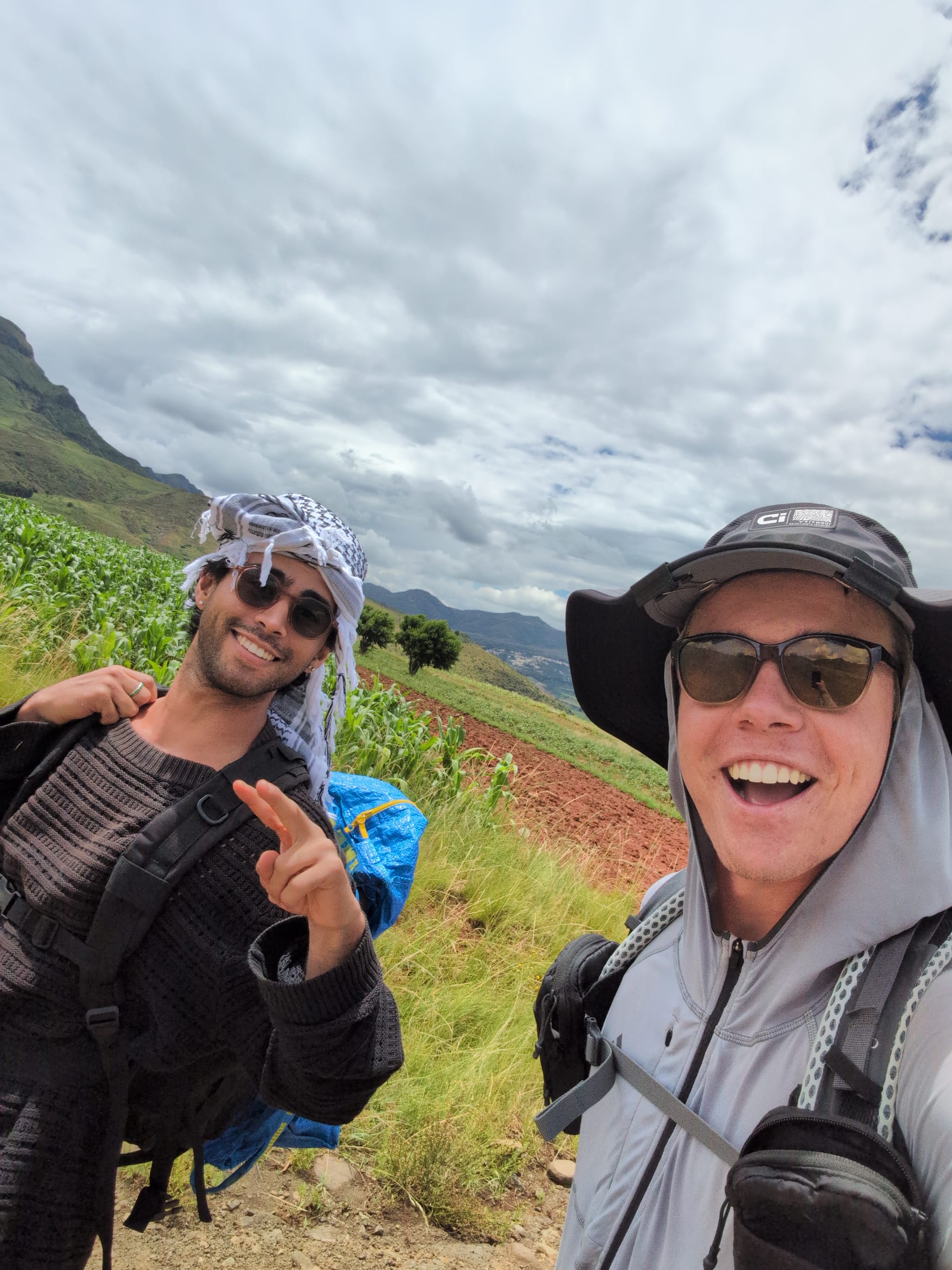
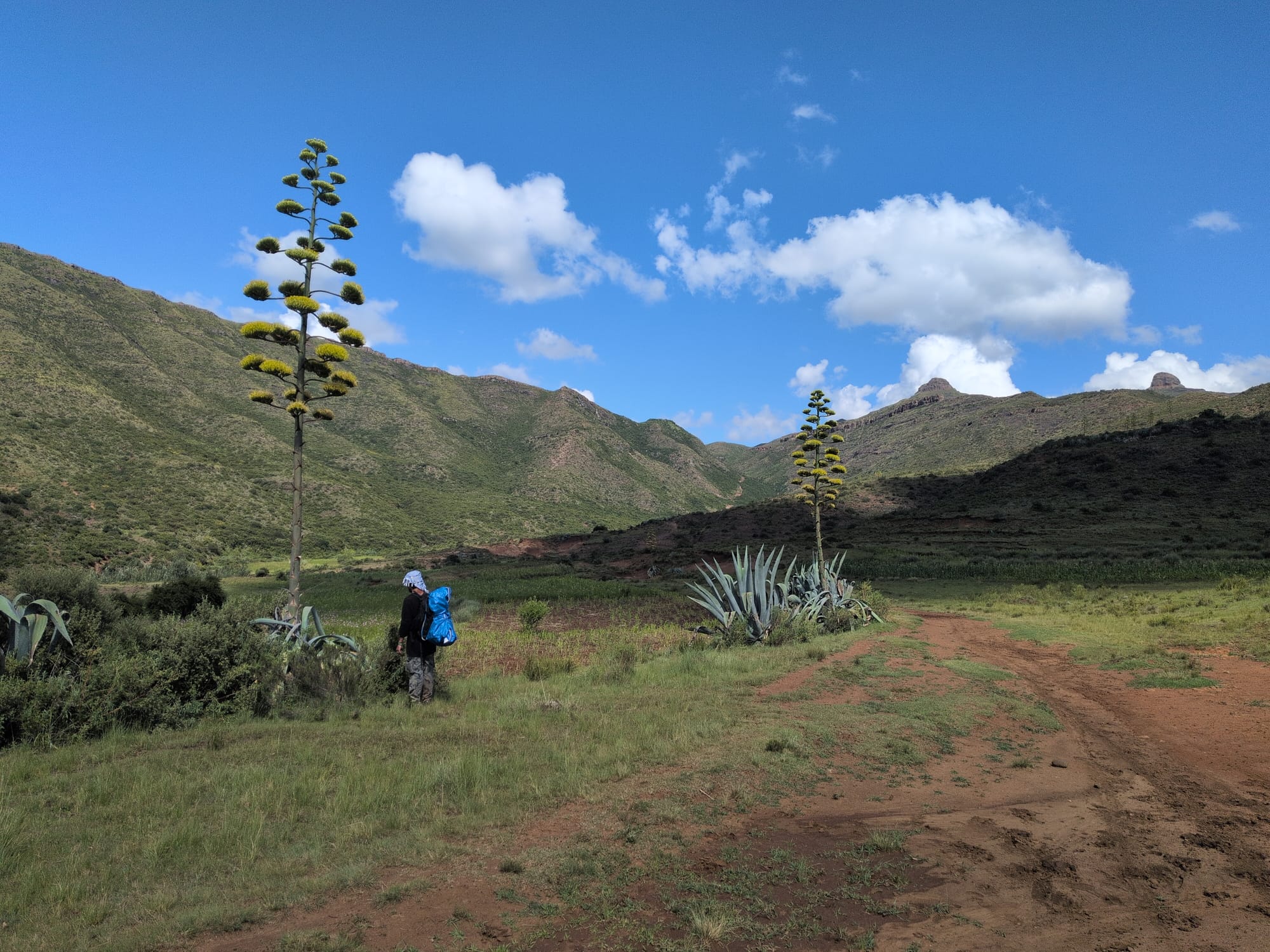
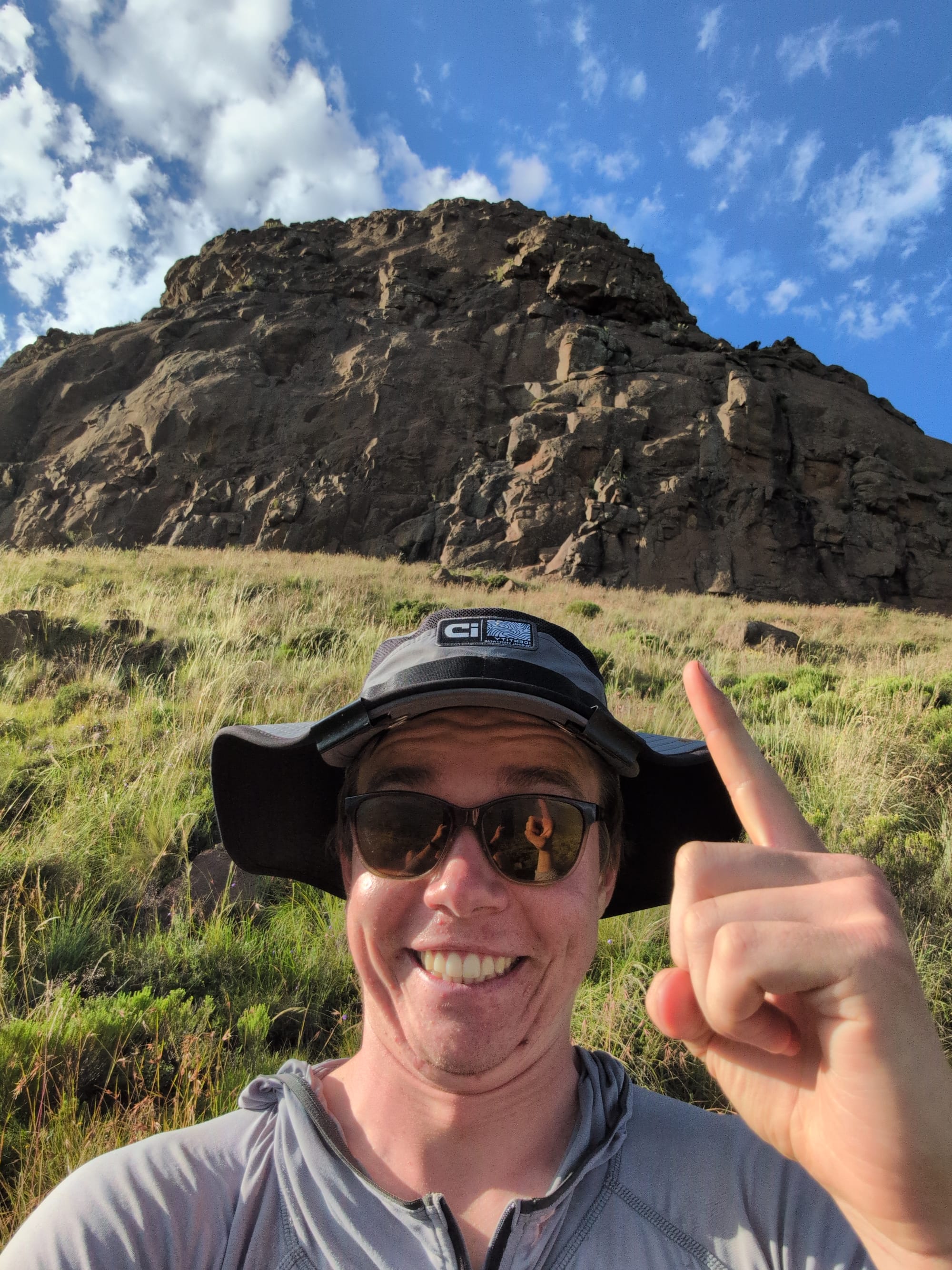
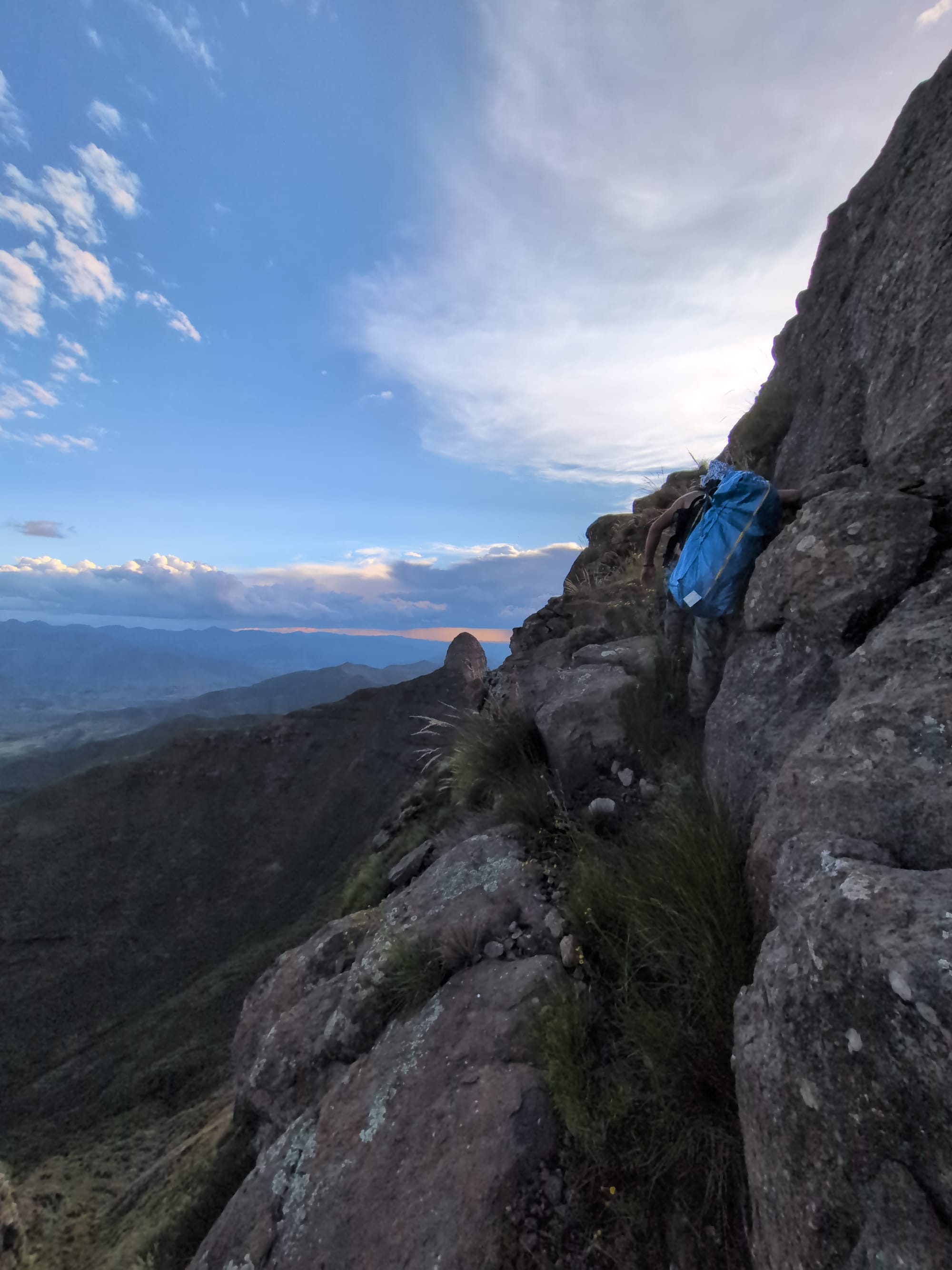
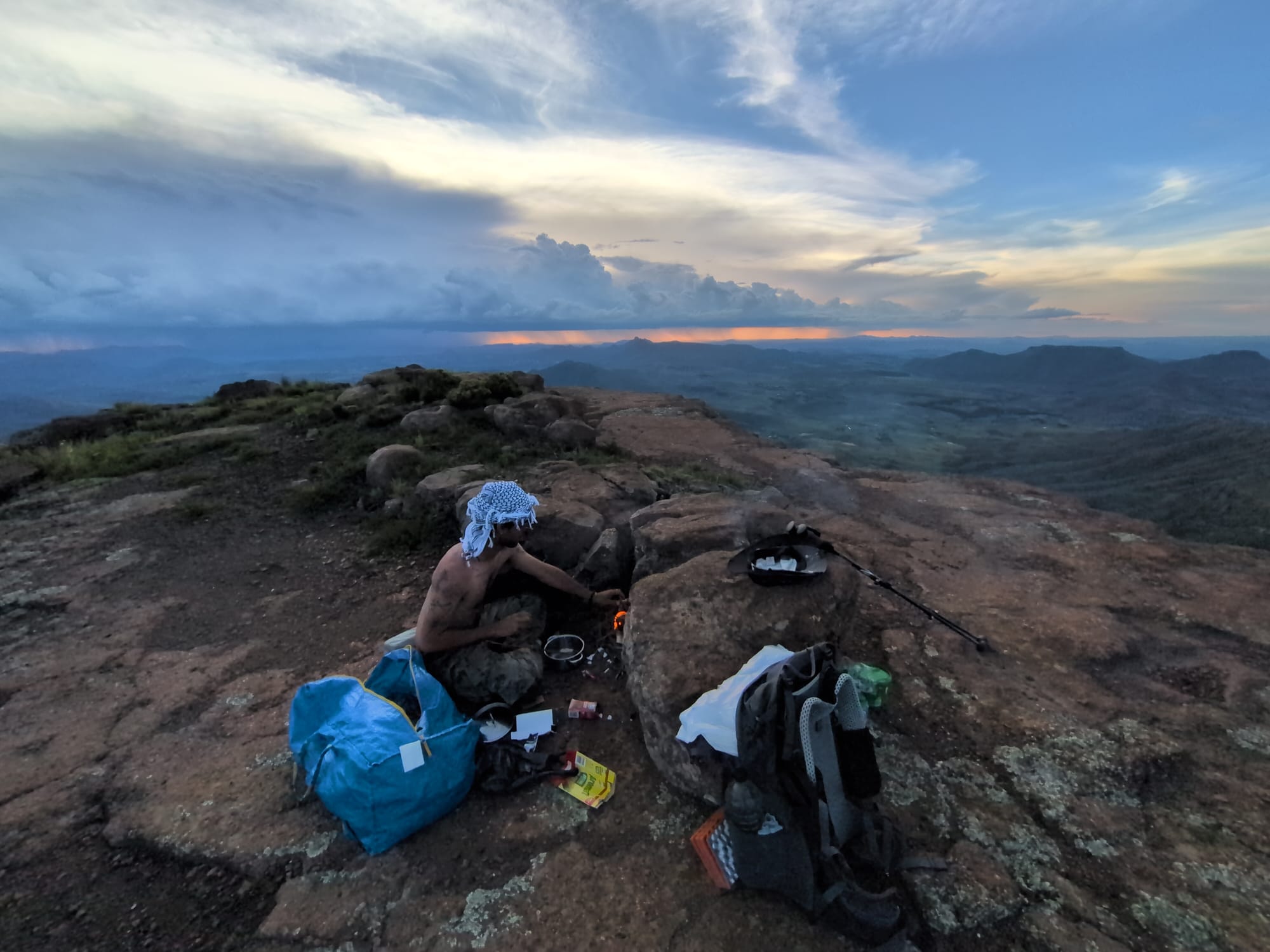
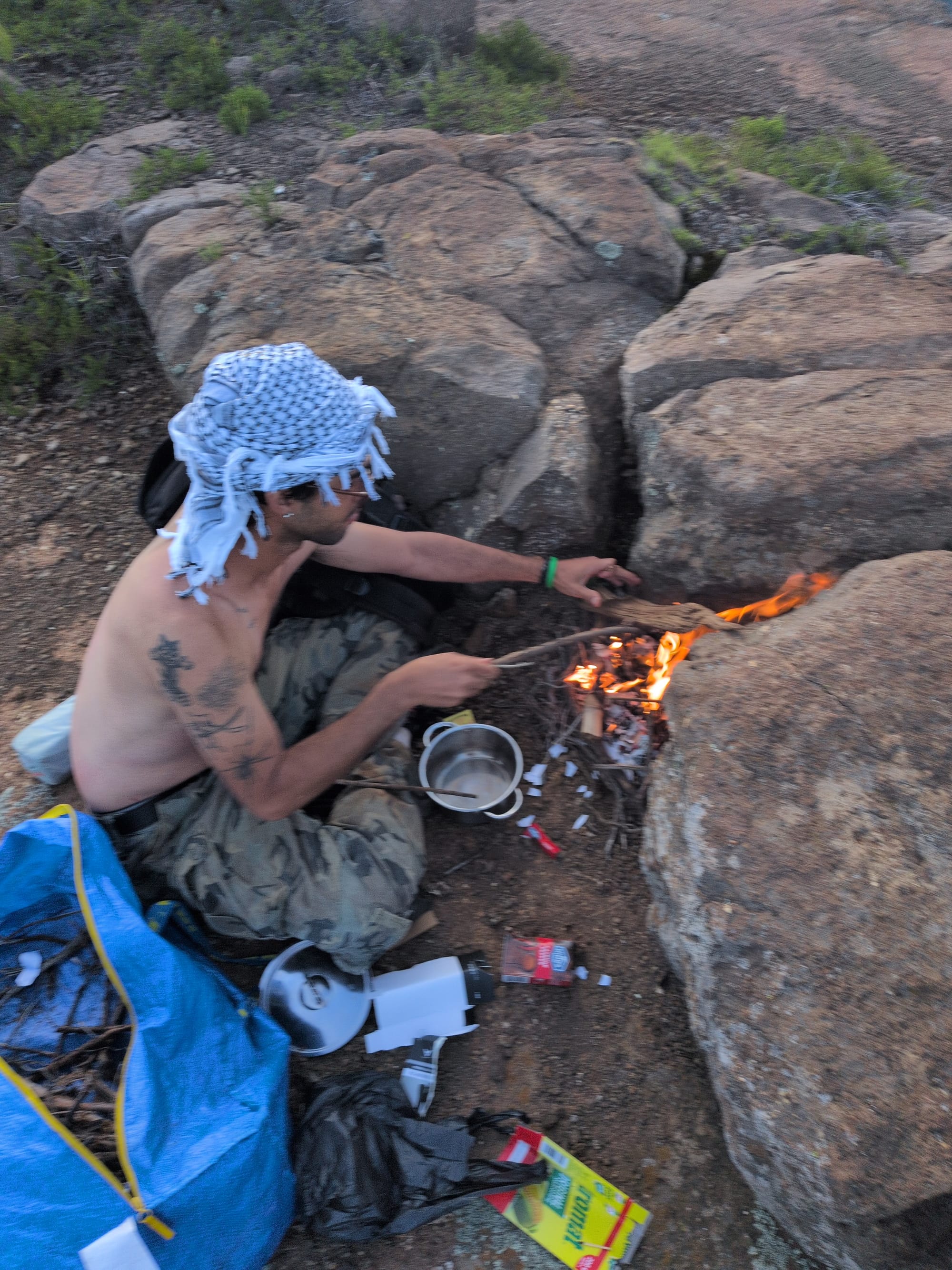
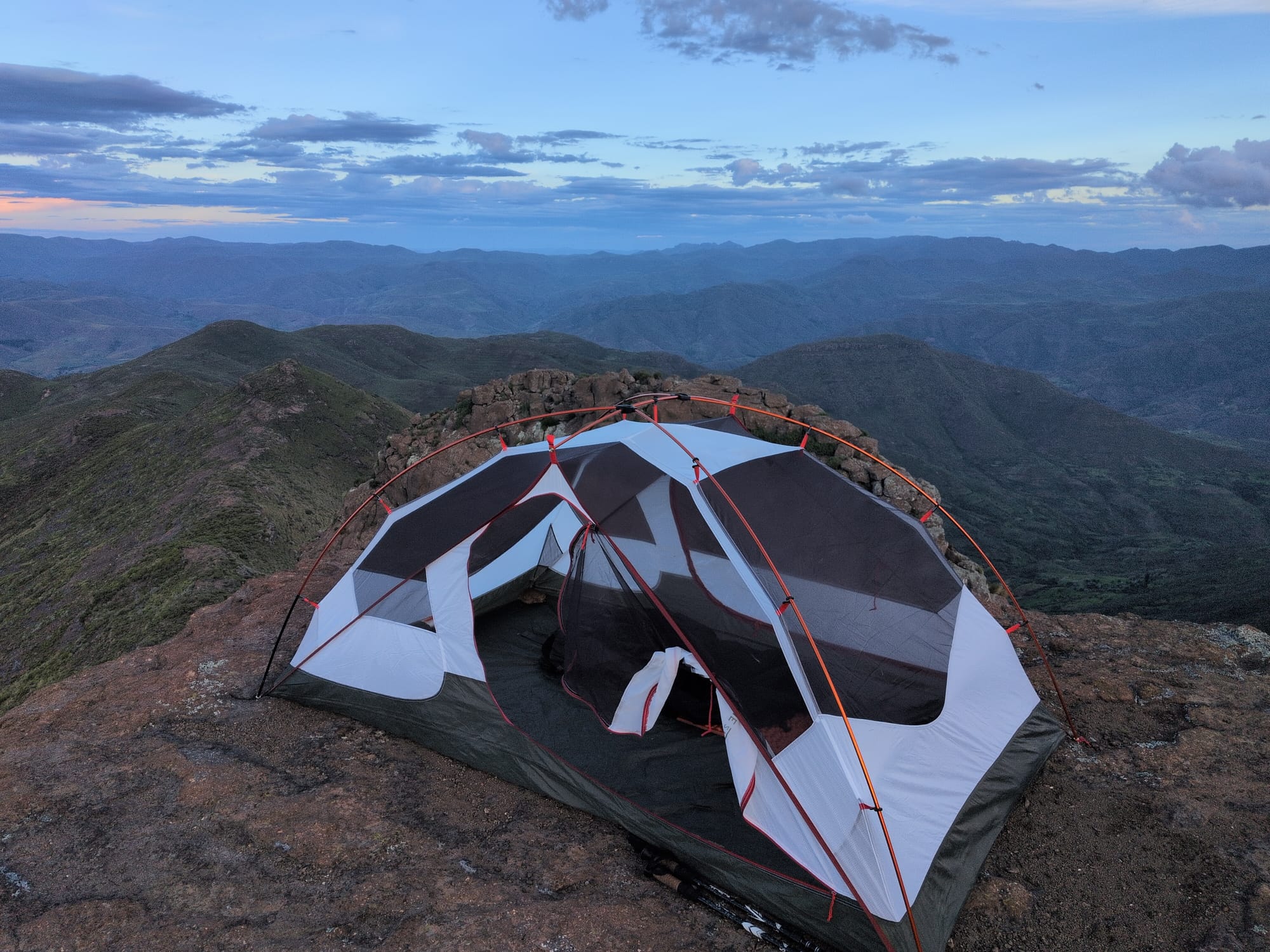
Hiking Thaba li-mele with Marlon, cooking summit-top before bailing back down the mountain to safety during a storm
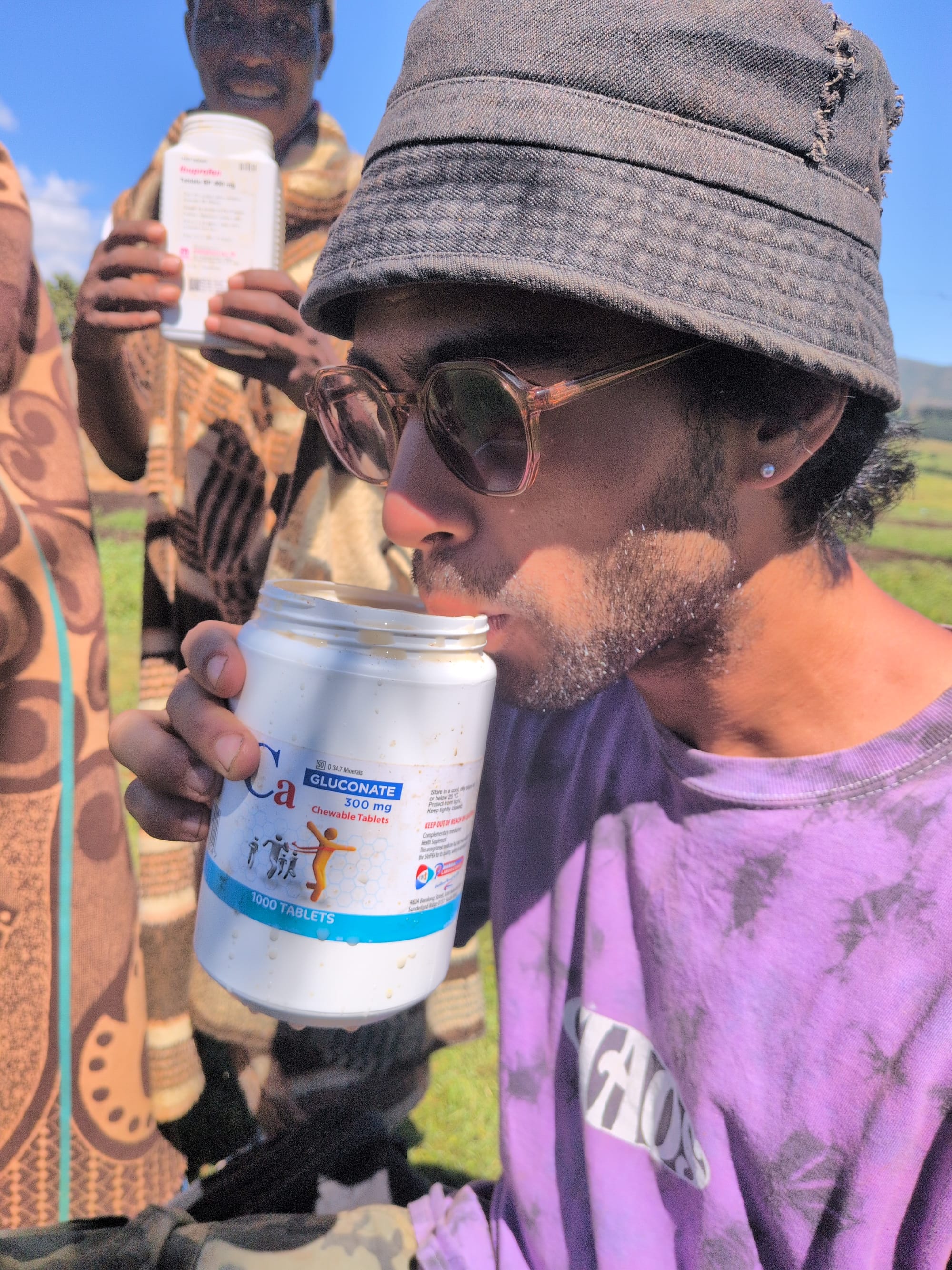
Marlon tries homemade joala (alcohol) from fermented sorghum. I tried a little, sour tasting but good!
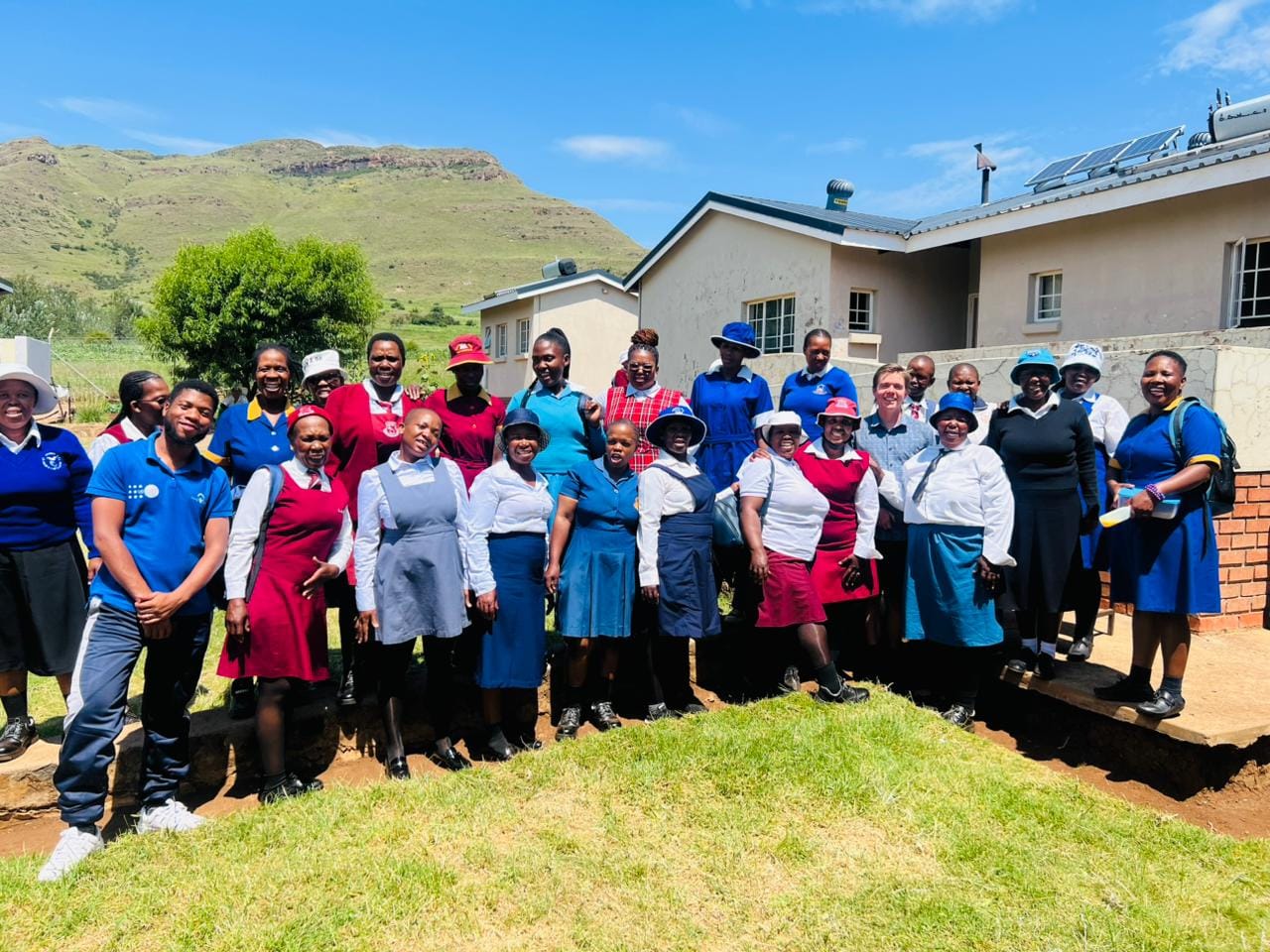
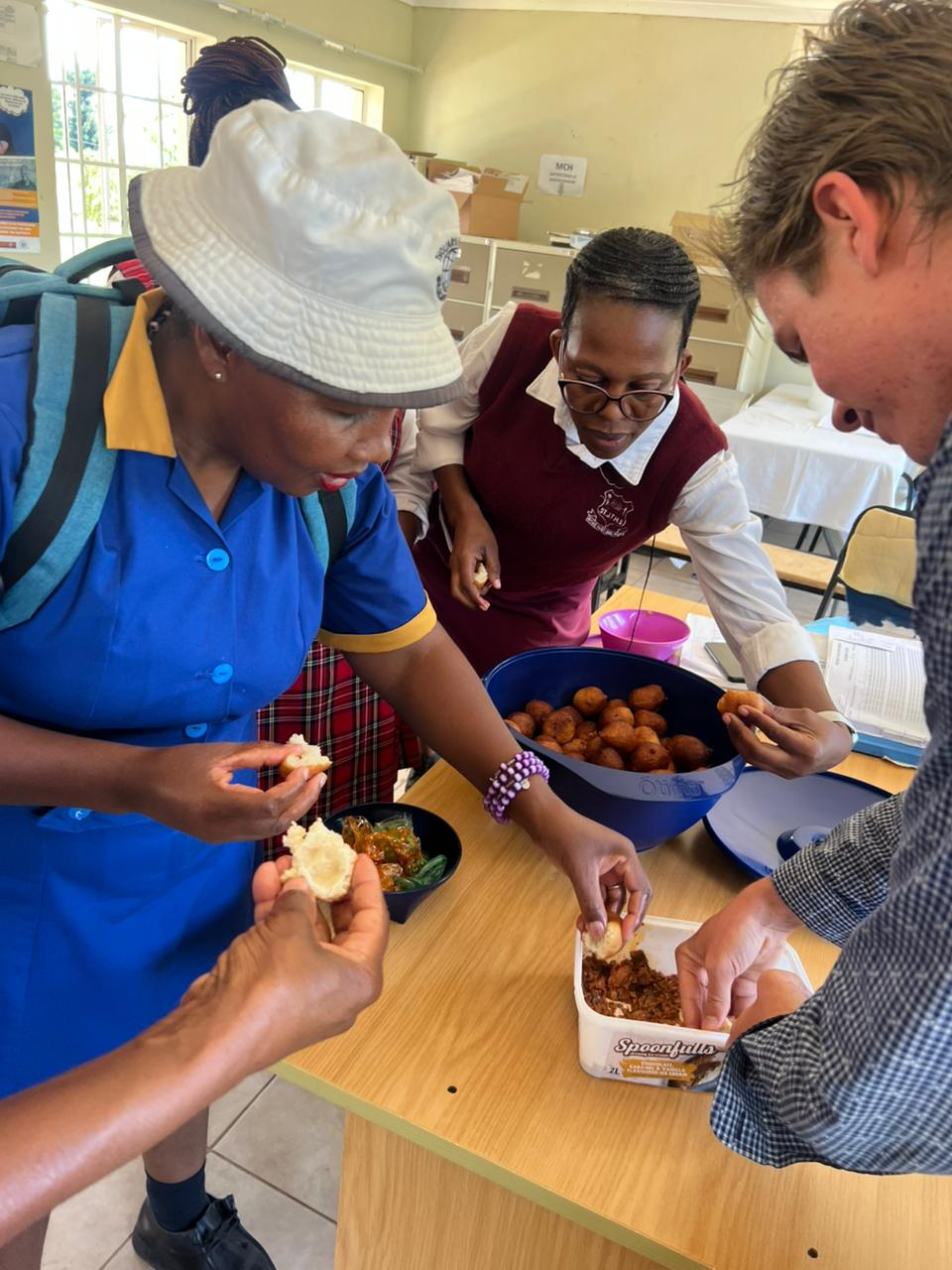
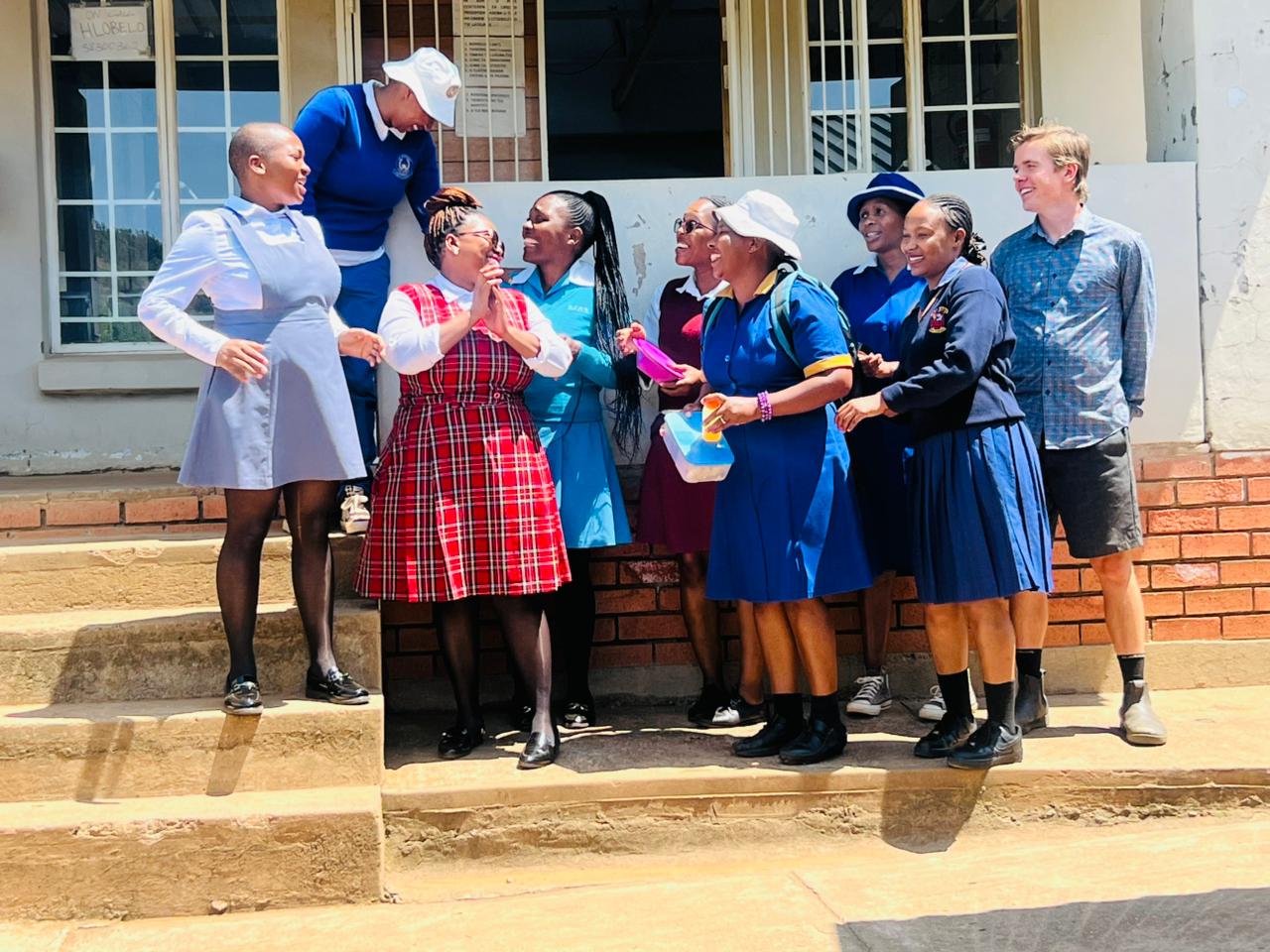
Clinic celebrates back to school day, so the clinic staff wears school uniforms to work!
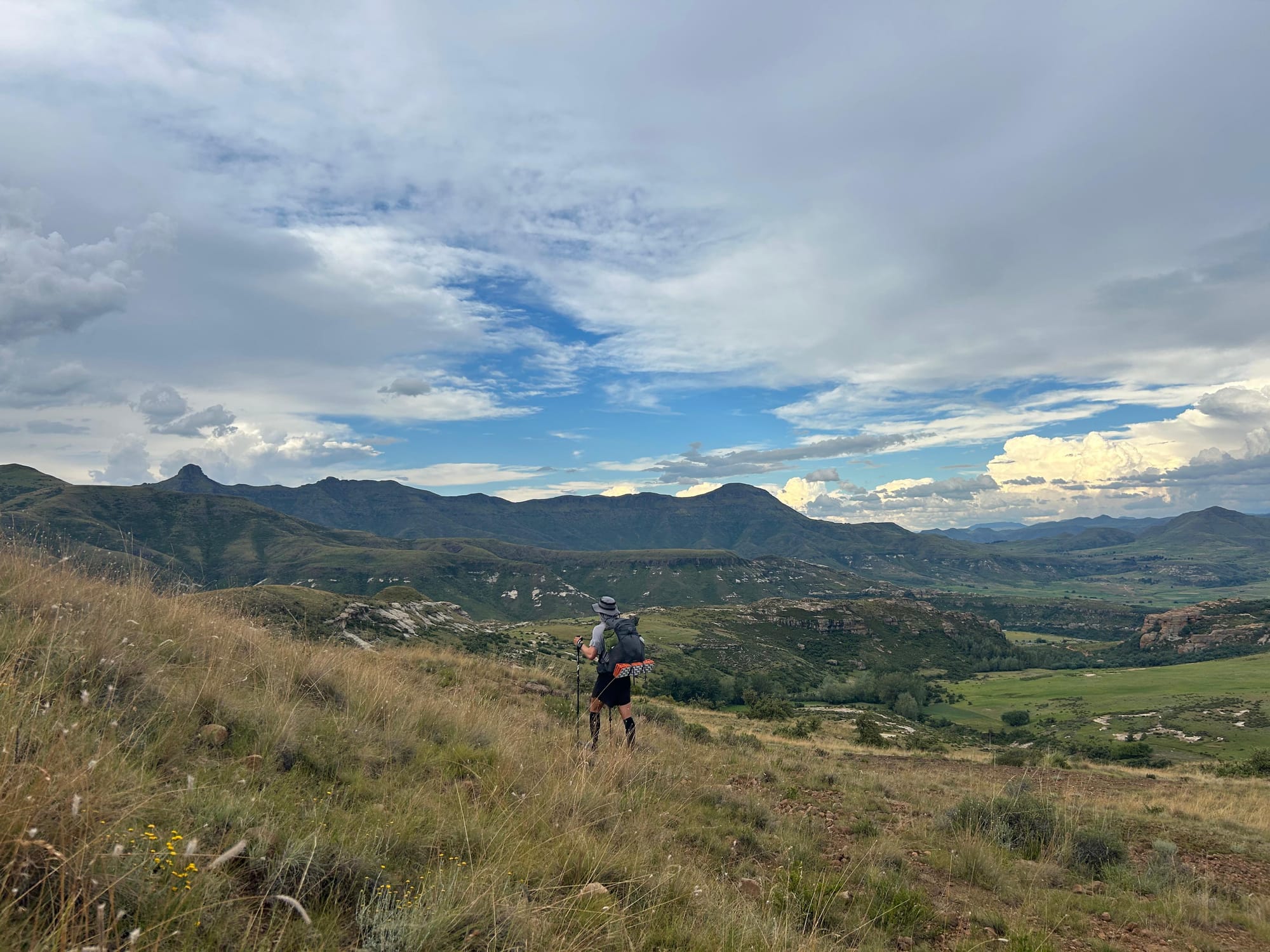
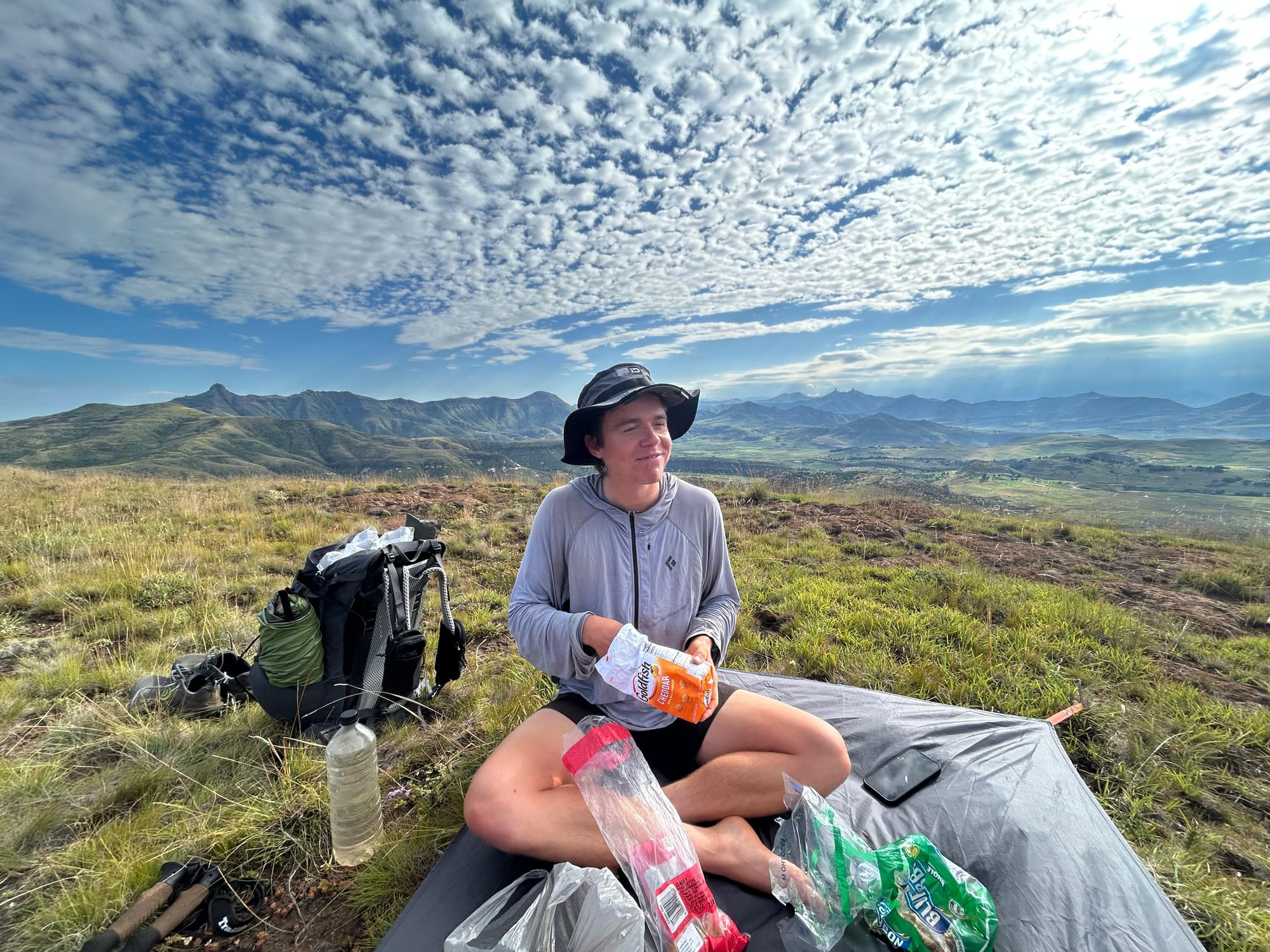
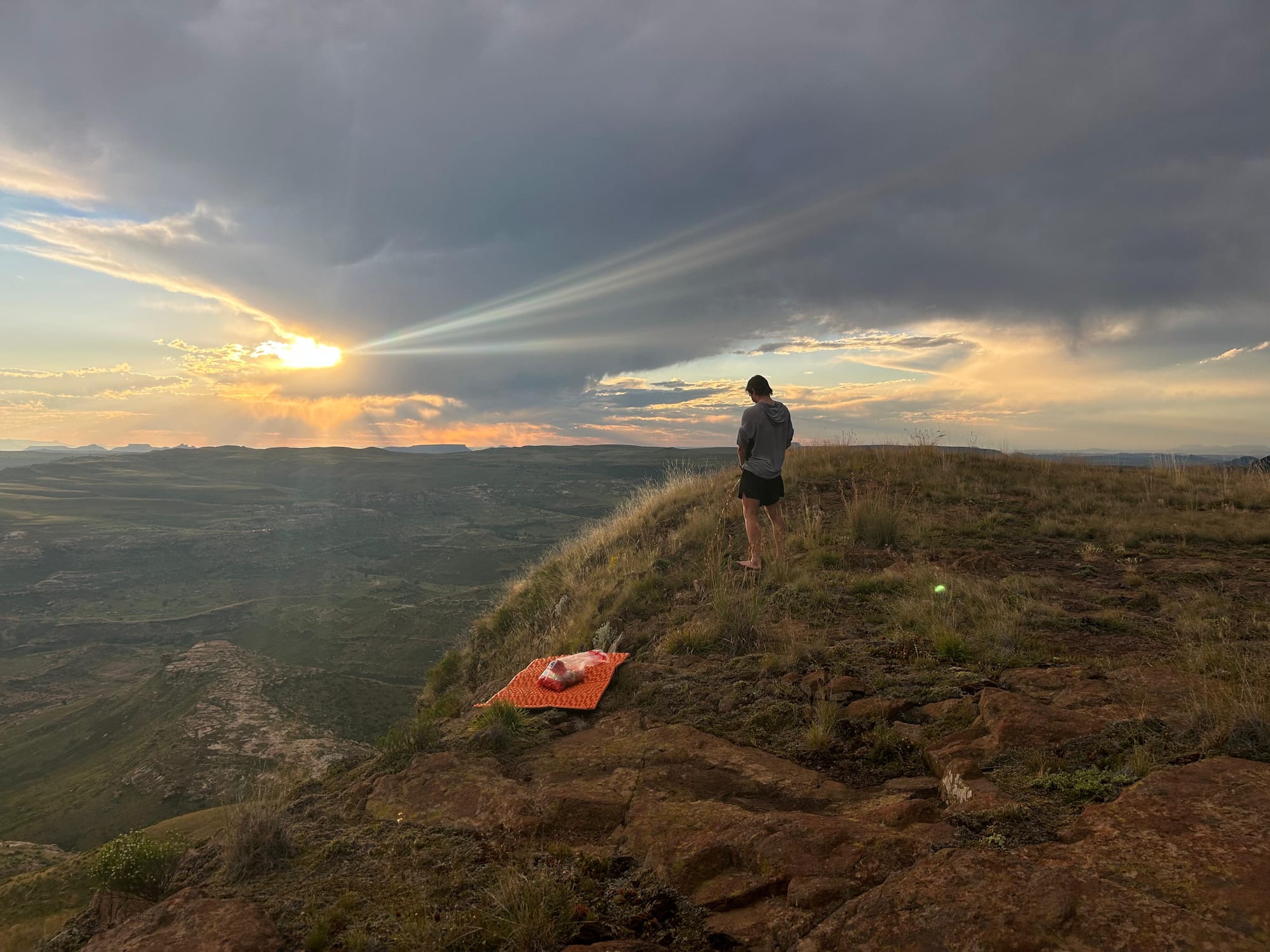
Overnight hike with my friend El. Enjoyed some goldfish, fresh from El's United States care package.
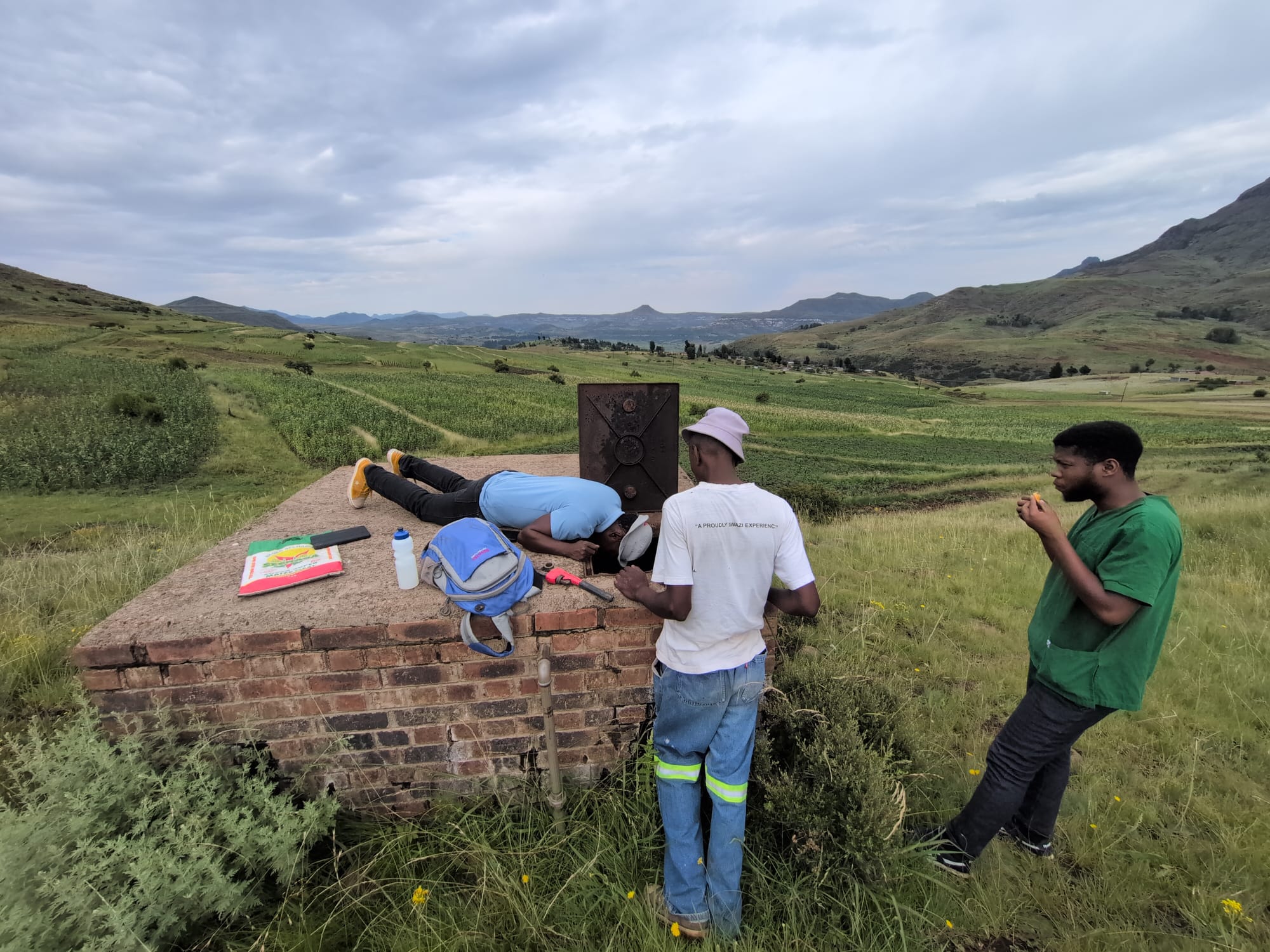
At the clinic one day we spent the morning with a government employee, testing the water from nearby wells.
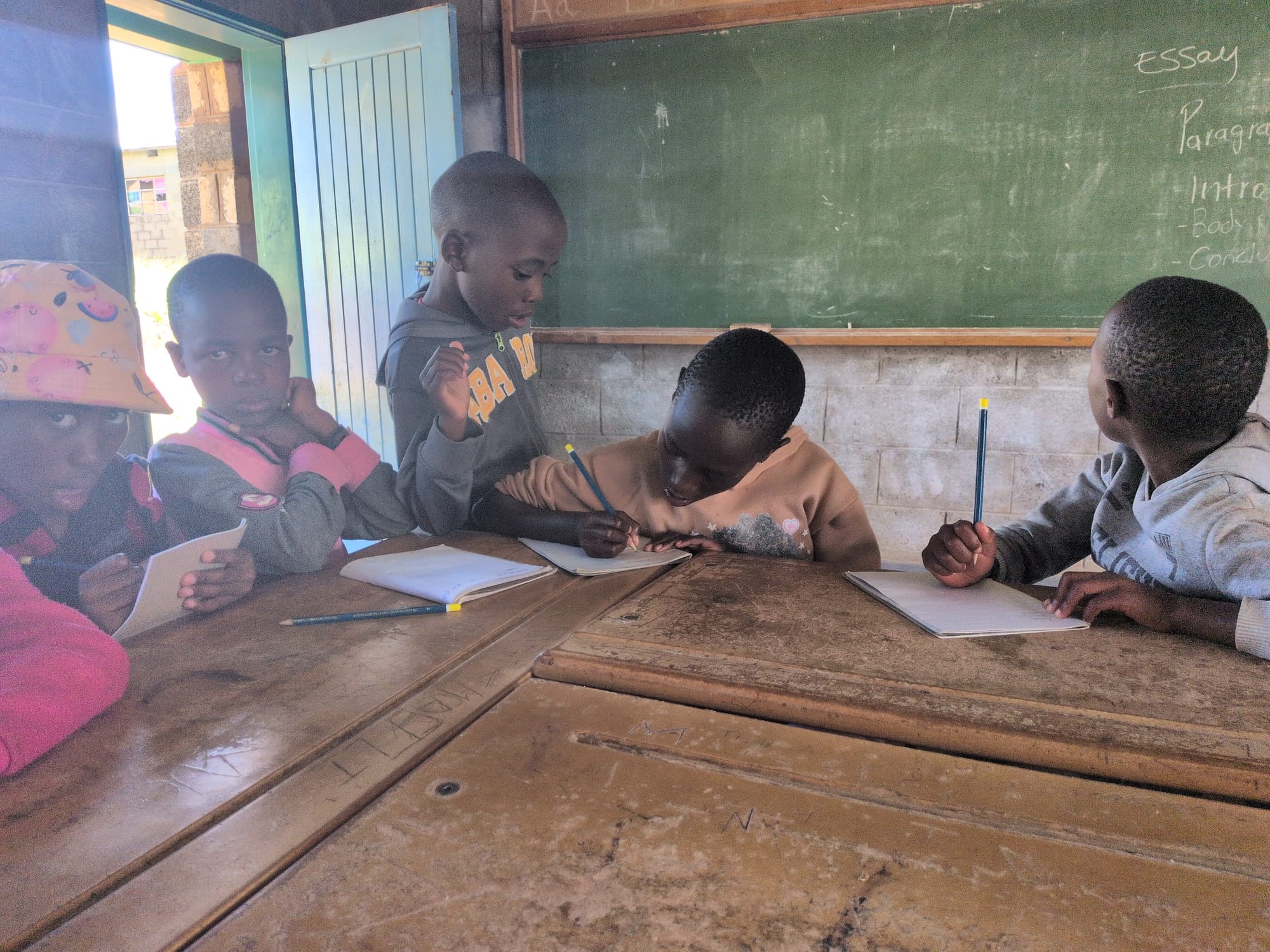
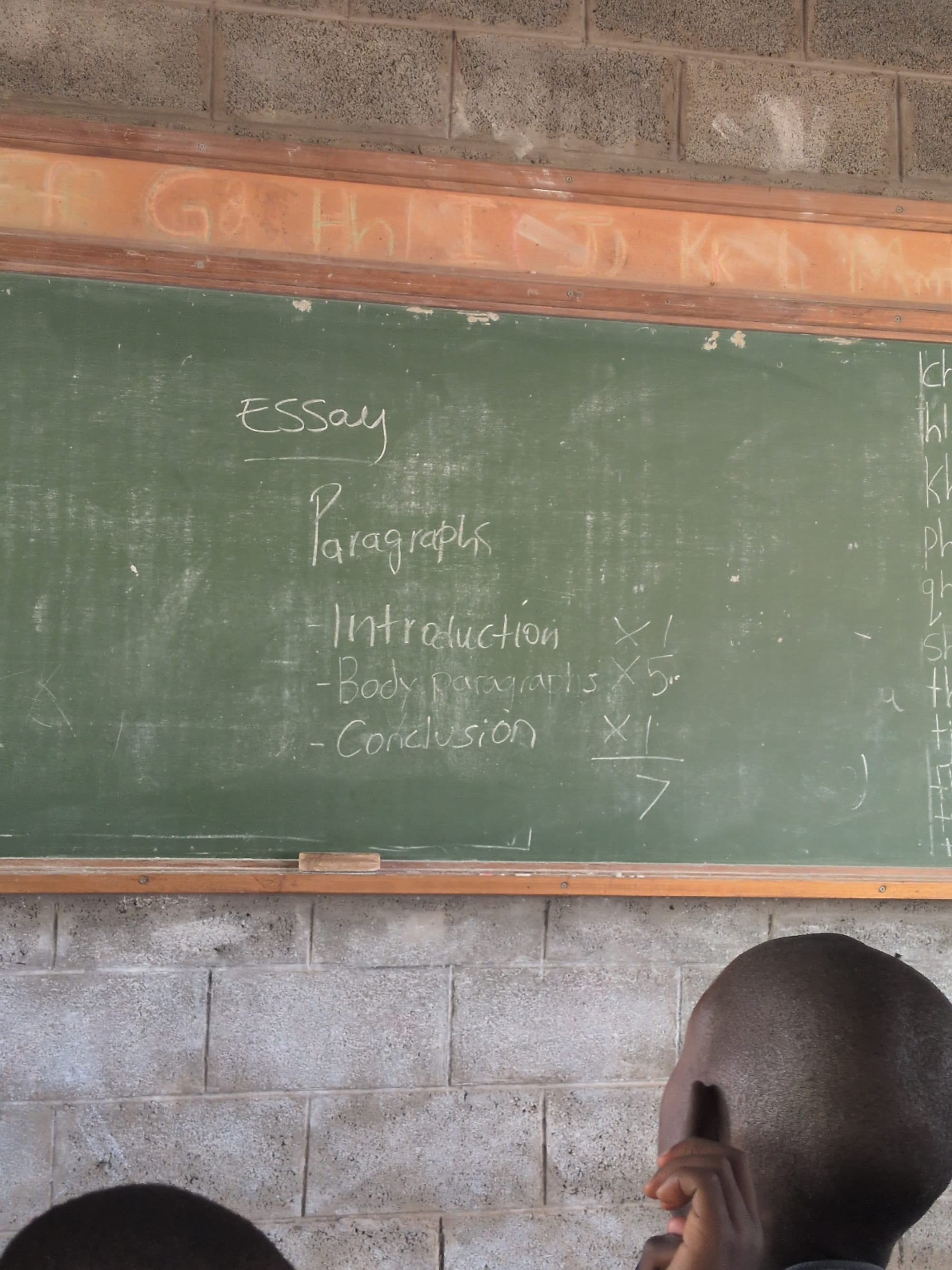
Helping the local kids learn things they are interested in
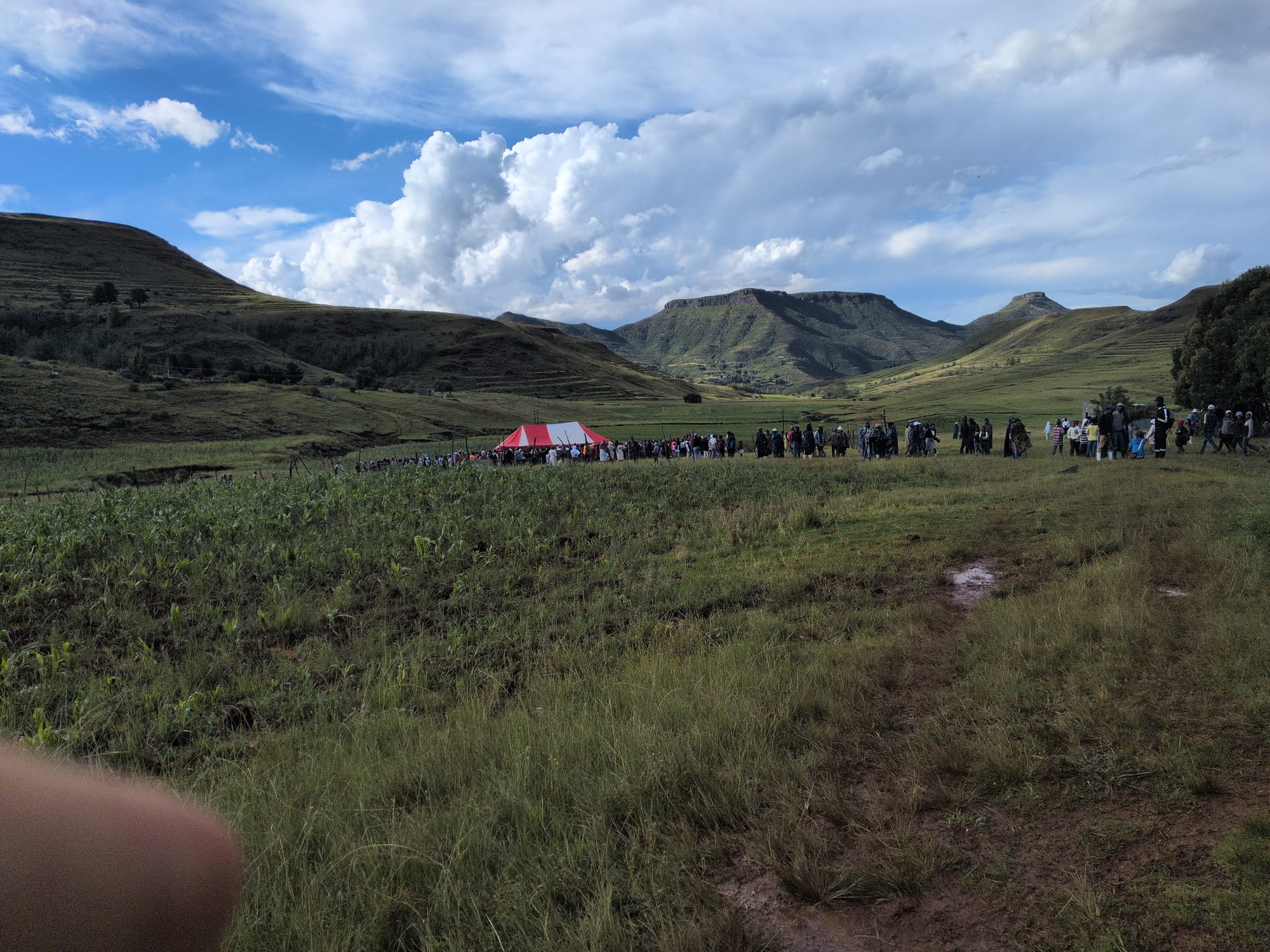
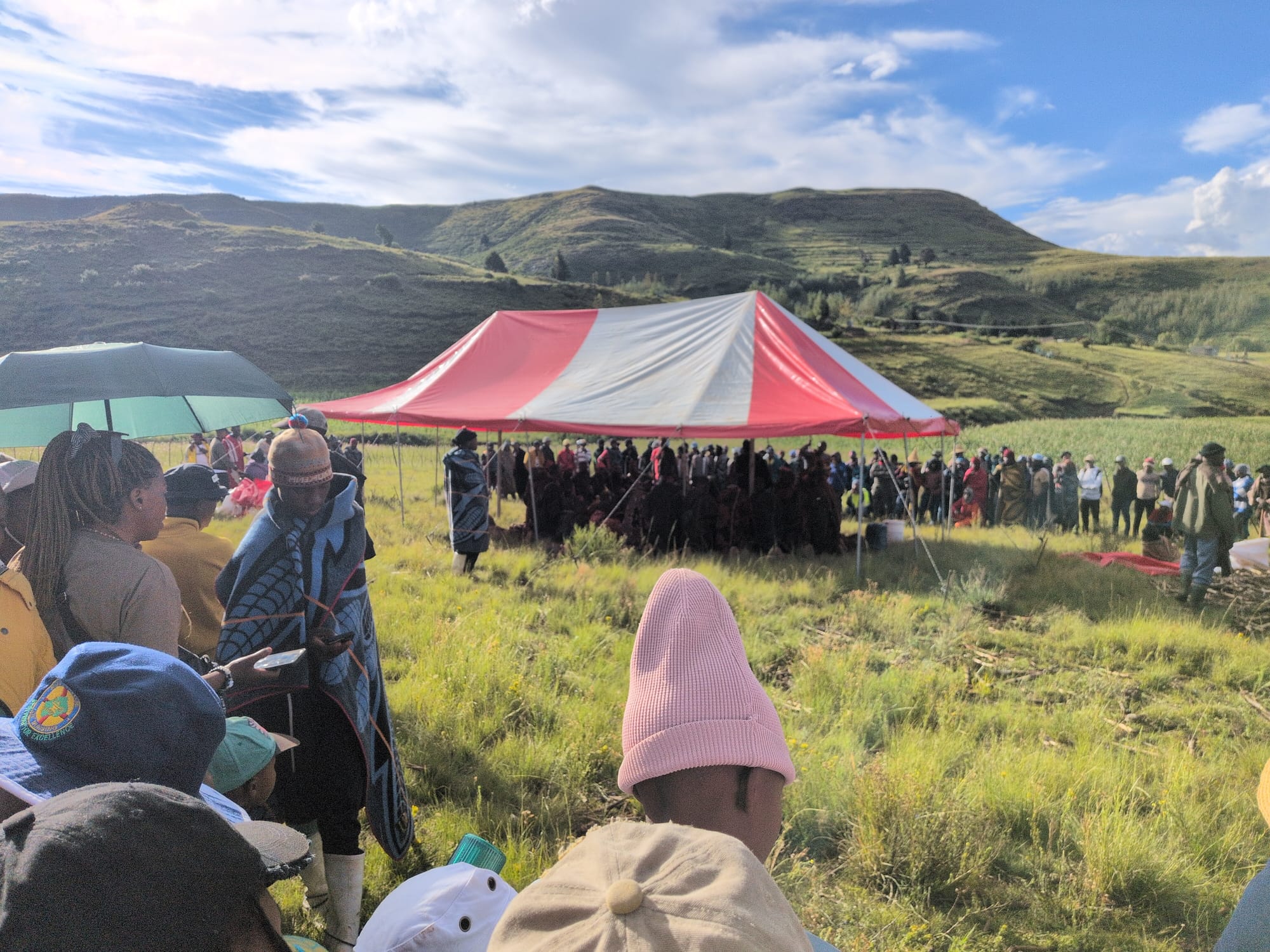
Pics from the boys initiation school ceremony I attended
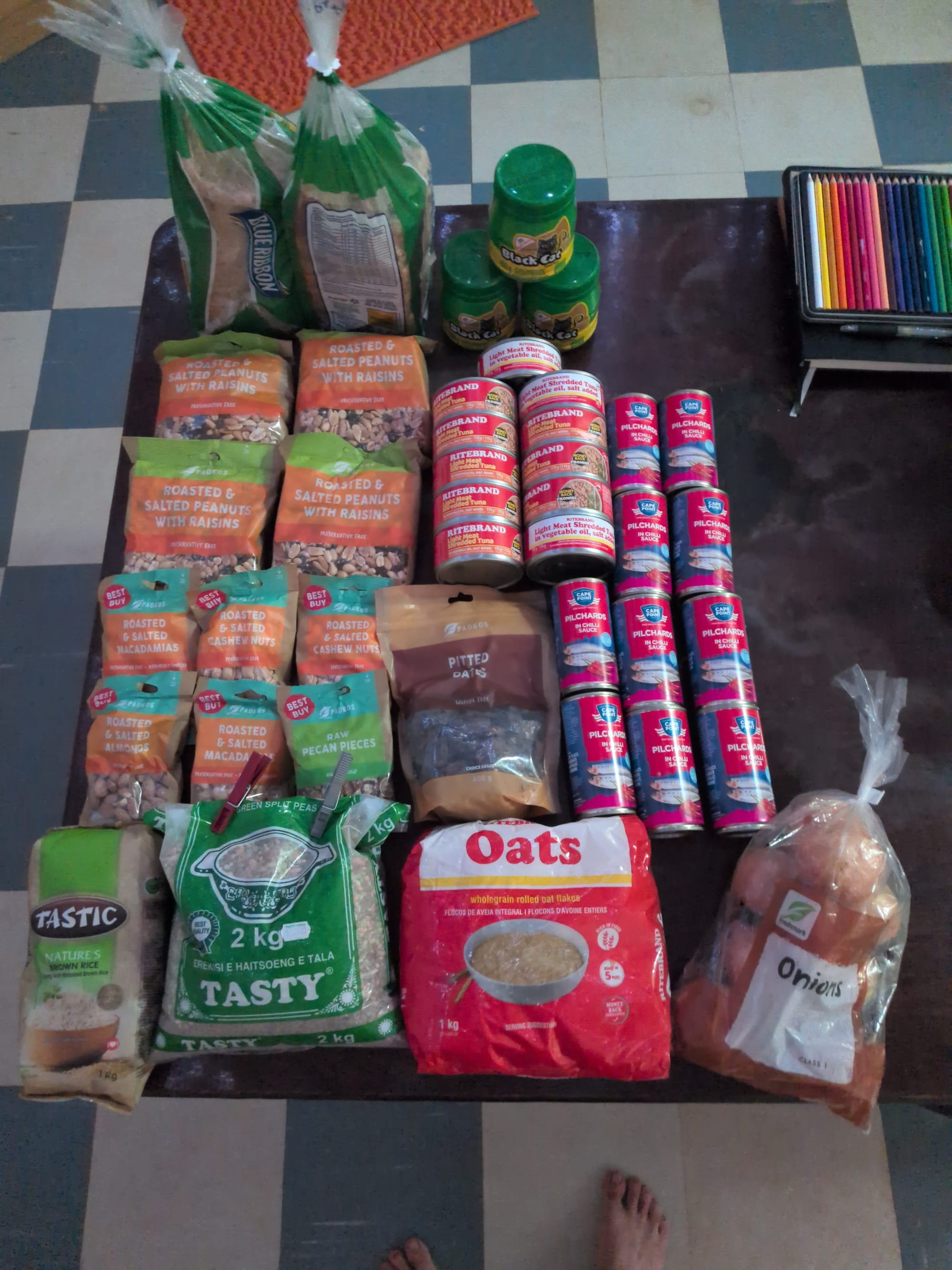
My food haul to support me for three weeks! (Not pictured: 2kg of carrots and 2kg of braai chicken, since they are in the fridge/freezer at the clinic).