Peace Corps: Smiling Suffering
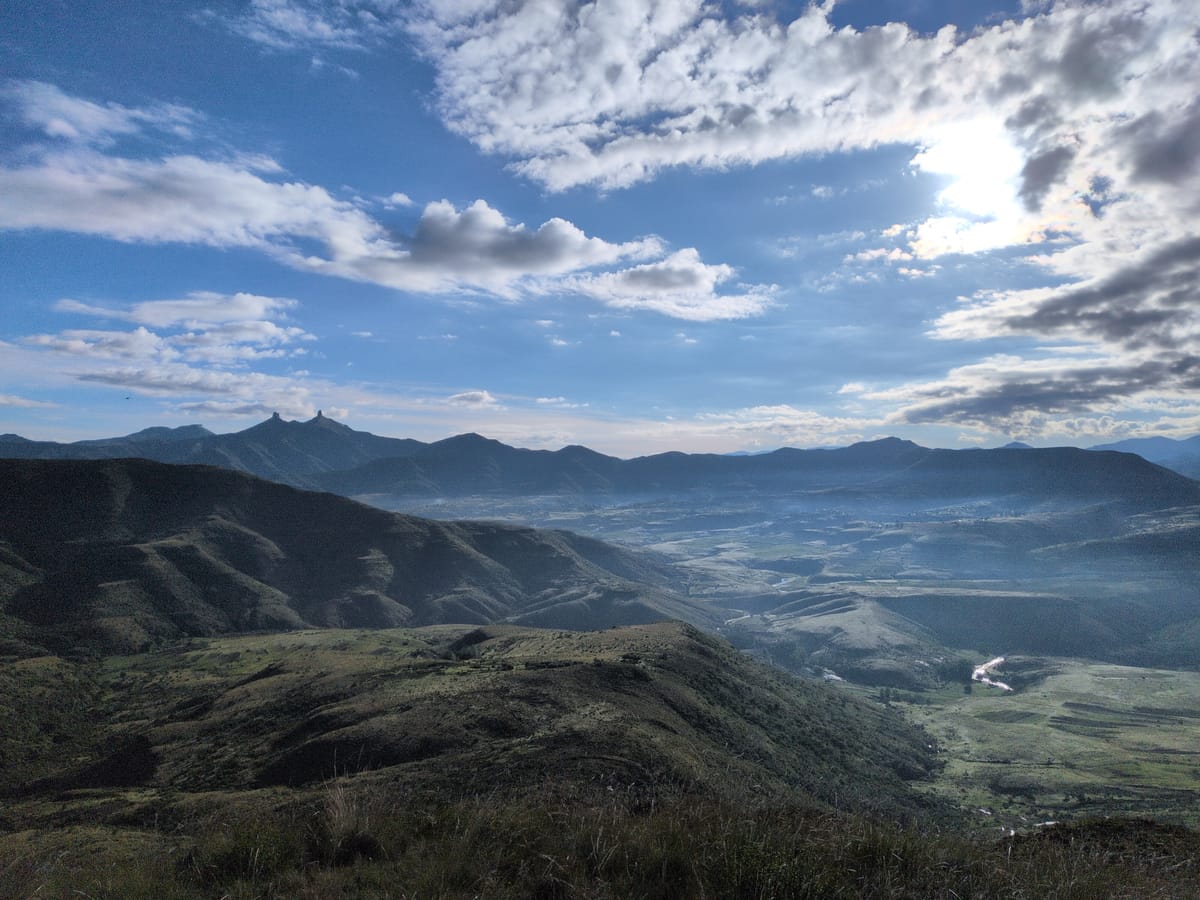
Greetings from Lesotho, and happy 2026!
It seems that it has been a month since my last missive, and I've heard rumblings from my surprisingly avid readers, asking where the blog posts are. Well, they will still come, albeit at a slower pace, now that I'm settling into service and my permanent site.
And that slowdown is a reflection of a parallel shift I'm experiencing here at site. In the beginning, there was pre-service training, and everything was new and exciting, with plenty to talk about; which necessitated a weekly posting schedule. Now, I am living at a slower pace, with less novelty and more routine, and as such less to talk about. So, perhaps monthlies are the new gold standard? Time will tell.
Anyways, it seems the weather back in America is now thoroughly in the midst of winter. Something I cannot fathom right now, as the weather here sprouts summer daily into the air. The temperature is hot, but not a blistering-lets-stay-inside-all-day hot, more of a wears-you-out-over-the-course-of-the-day hot. I'd guess it's mid-80s usually, but the nights get cooler, so sleeping isn't too bad. If you couldn't tell, I don't check the weather here, and thus temperatures are all based on relativity and feel; quite astray from the daily forecasts and significant portions of attention that are paid to the science and quantification of weather in the United States.
I am enjoying the warmness, but the long game of service is starting to set in. I heard a previous volunteer (who finished service in December) say that the more suffering you can endure and enjoy, the more successful your service will be. And that seems to be shaping up as factual, as I push into the next 23 months.
You see, most basic things in Lesotho are harder, more involved, and/or more time consuming than the equivalent in the states. In the US, if you need water you go to the sink; In Lesotho, you walk to the pump then carry 2x20L (44lbs each) buckets of water back home. In the US, when you run out of gas (for cooking/heating), you drive to the store and get another tank (or possibly call a company to come to your house and fill it there); Well, I ran out of gas yesterday, and getting it filled required me to haul the 9kg (~20lbs) tank 3.5 miles over a 500ft mountain, and then do the same in reverse with a full ~18kg (~40lbs) tank.
Of course, some of this isn't required, and its just my quirky exercise-centered self (plus slight masochism) talking. For instance, I learned today, after returning from my grueling 7-mile-2-hour-1000-vert-tank-carrying workout, that someone in my village would have filled my gas tank with their donkey for 35 rand (~$2.00). You know whats funny? I'm not even sure I'll take that bargain next time; it was a great workout 😄 (Also, it takes a while to run out of gas, so this is probably a quarterly endeavor at most).
Some things are notably easier though, such as the beauty, grace, and magnificence of the piss bucket, which saves both time and water, and is ultimately way more fun. As an aside, the amount of water that's saved by living like this is absurd. I looked it up: the average American uses 80 gallons of water per day. Myself? 3.5 gallons. After seeing it in action here, I'm shocked that every home in America doesn't funnel rainwater for drinking. Just hook up your roof's gutters to barrels and you're set. What a wasted opportunity to save water, electricity, and (everyone's favorite) money!
To return to topic of suffering, it's also worth noting that events that are minor speed bumps in the states turn into potential roadblocks in Lesotho. Earlier this week, early Tuesday morning, I was running and jumped off a small embankment while doing an fast interval. My left leg landed funny, rolled outwards instead of inwards, and I ended up on the ground for 15 minutes, then proceeded to hobble to the dirt road to catch a taxi home (which I was ~3 miles from). Luckily, some people saw what happened, and told the taxi driver, who then let me ride back for free (which was both very nice and needed, as I had no money on me anyways).
Now, I've rolled/strained my ankle from running plenty of times before, but having a car means you can still get everywhere; Almost nothing changes. The circumstances are different here, as my walk to work is a mile each way. I had to miss a day of work, but was able to hobble up there by Wednesday. It's now Saturday, and I just completed that 7 mile gas tank expedition I mentioned previously, so needless to say my ankle is healing quite fast. No need to worry!
As mentioned earlier, a veteran volunteer said the more suffering you can endure and enjoy, the better your service will be. The only things I've mentioned thus far have been physical; water carries, walks to work, gas tank adventures. And to be honest, if you know me, then you'll know I'd probably seek out stuff like this whether it was mandatory or not. Exercise, in any form, always rings to me as an enjoyable challenge.
What's been, and may remain, much harder is the mental side of suffering. I live quite far from other volunteers, and farther still from friends and family in the US. Many other volunteers live closer to other volunteers, and they can often meet up on weekends in shared camp towns to chat or hang out. This is not my circumstance, since I do not share my camp town with anyone. So, there is lots of solitude, which is refreshing and unnerving, and I'm often feeling both of these opposing emotions towards the alone-time throughout a single day.
Even though I live in a tight-knit community, and have awesome coworkers at my clinic, it's challenging to connect with others. The language/cultural barriers and sense of being an outsider prevent deeper connections. But I remain hopeful that such perceived barriers will erode away in the coming months and years. After all, I've only lived here for 1.5 months.
I do have ample communications with other volunteers who I became very close with during training, and those calls/texts are welcomed with open arms. In addition, my mobile data access makes it easy to call friends/family at home, whenever I want to. However, such interactions are two-faced, and sometimes elicit further feelings of separation. In the end, a technology-mediated human interaction will never compete with an in-person one, and I think that's something I am deeply internalizing by living here.
Now, despite the content of most of this post, I remain in great spirits. There are tough days, of course, but they certainly aren't the majority, and I seem to be adapting well to my newfound routines and life here in Lesotho. Perhaps the word "suffering", as I've used it this post, elicits too strong of a negative connotation. In the end, living in Lesotho rocks, and I'm very glad to be here; but I also recognize the importance of describing in detail the challenges I'm facing. Because, to be frank, I think you'll find that stuff far more interesting than if I just said "Things are great!" in every post and never tried to explain what the Peace Corps is actually like in practice.
The best way for me to thrive in Lesotho seems to be when I just live day by day, and confront one challenge at a time. Sometimes, on my walks home from work (as I stare into the blossoming mountainous landscape around me) I find myself caught in the scary thought that "This is it, for two years, I will be doing this". Moments of grandeur and long time-horizons such as that one can cause anyone to spiral, regardless of if you live in Lesotho or America or on the moon. So, I try to remember to slow down, and look at the next step instead of the marathon of Life trailing through the mysterious mountains ahead. The years and decades of our future lives that we forsee in moments of daydreaming are illusory. Events we conjure for our future never transpire as expected, and thus never arrive. The only thing arrives is Now. In fact, even Now never "arrives", because it never left. It's always here. Embrace that, and suddenly rolled ankles and bountiful solitude are nothing but gifts.
Stay well,
Connor
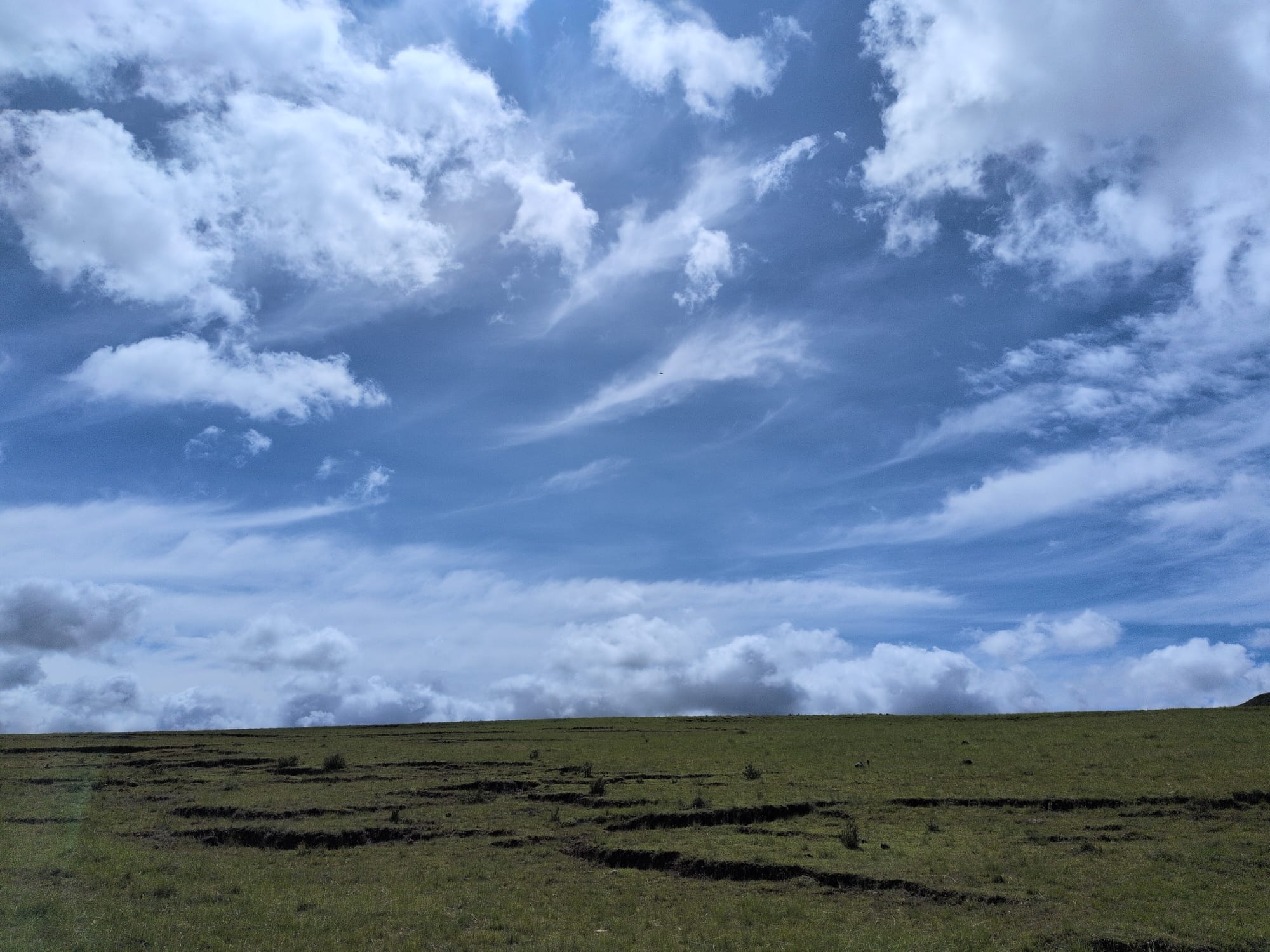
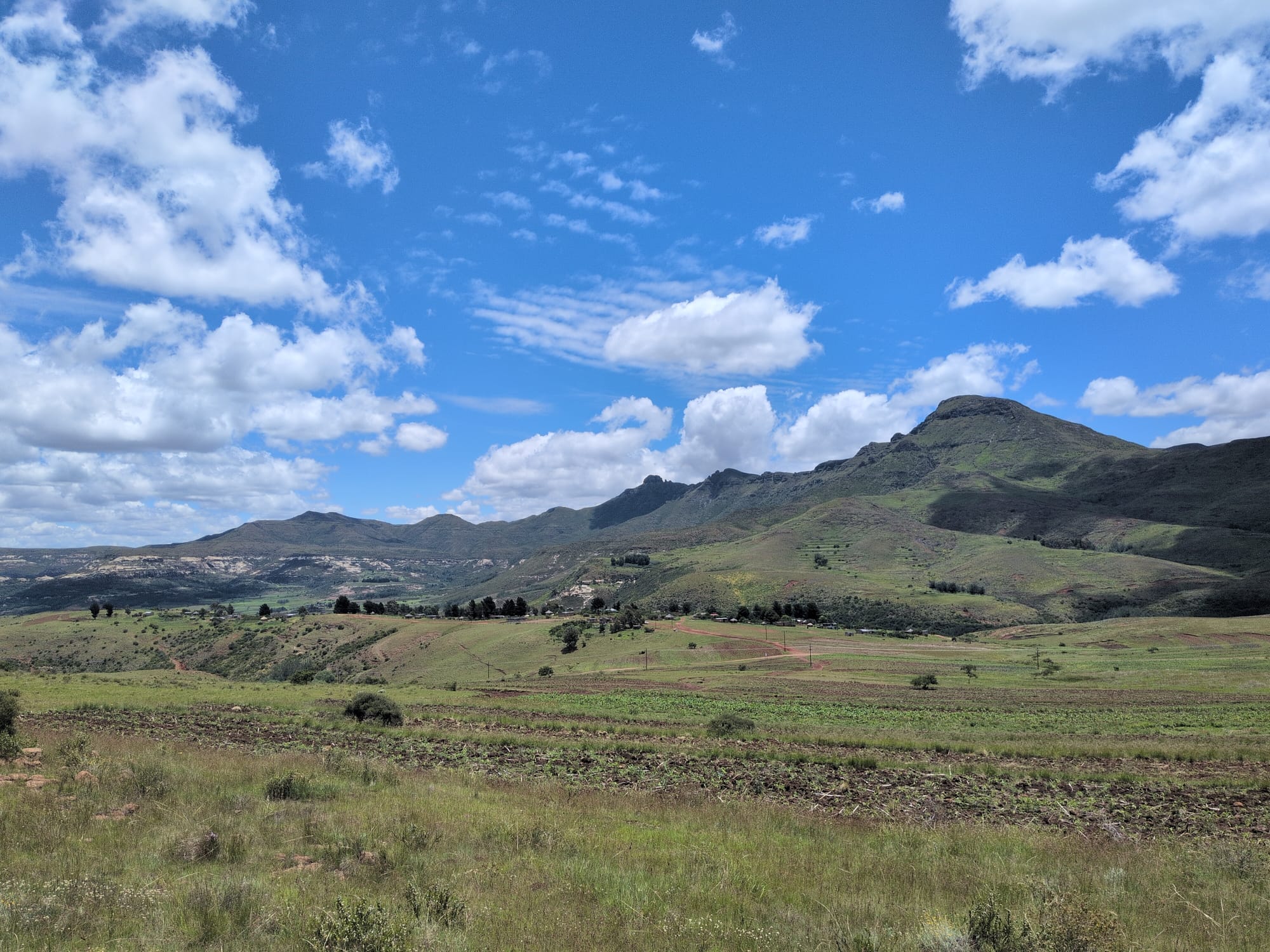
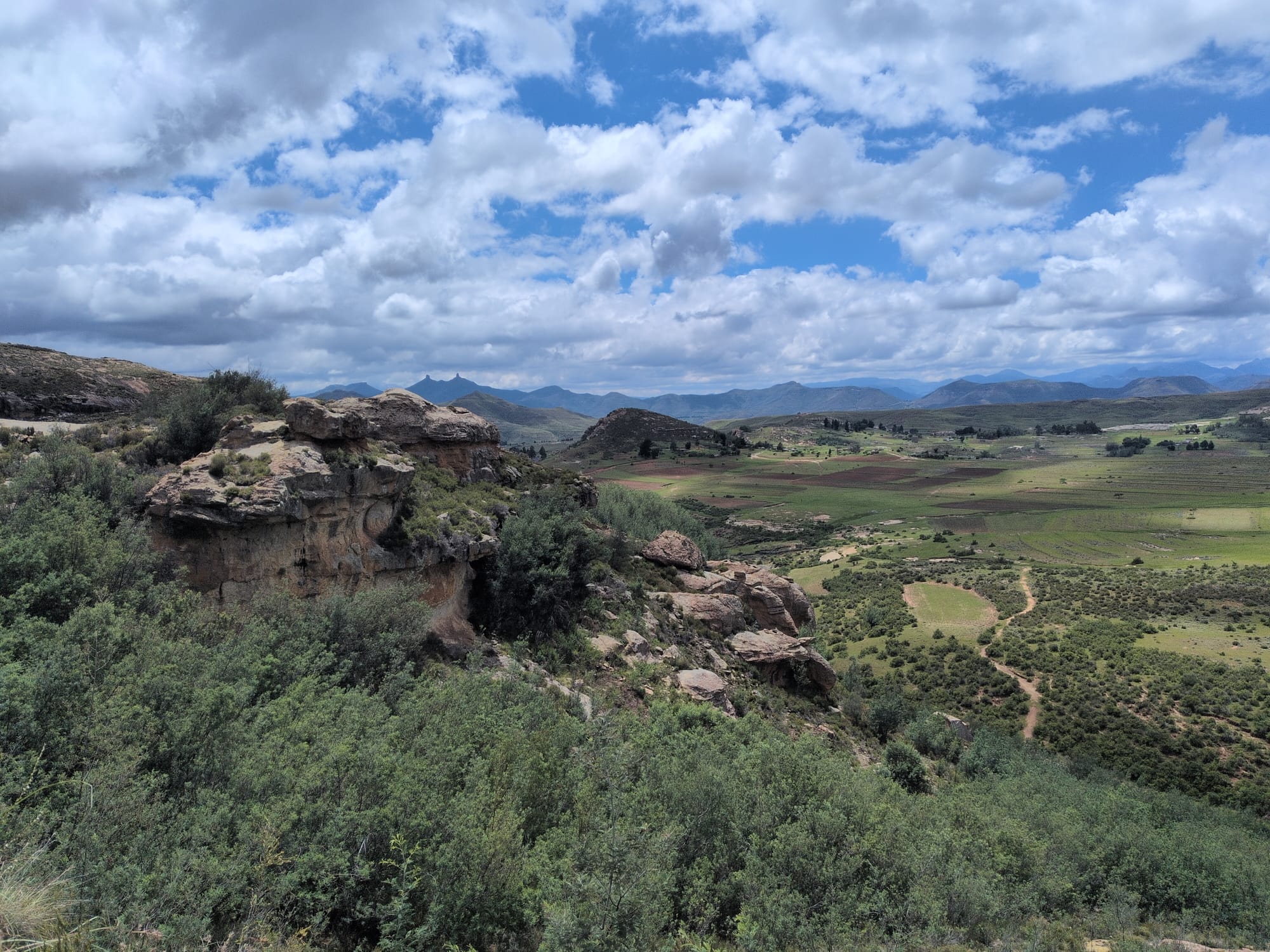
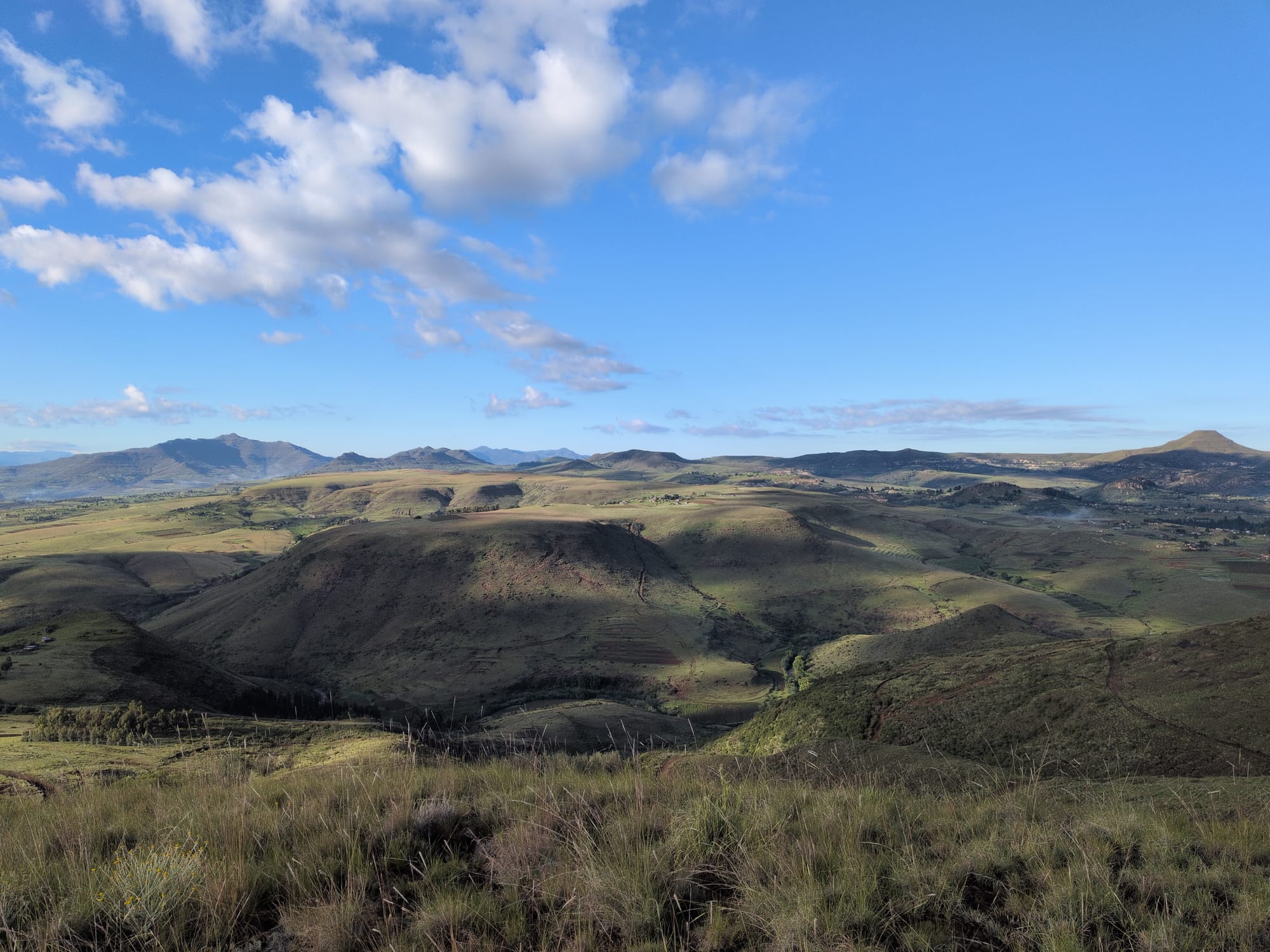
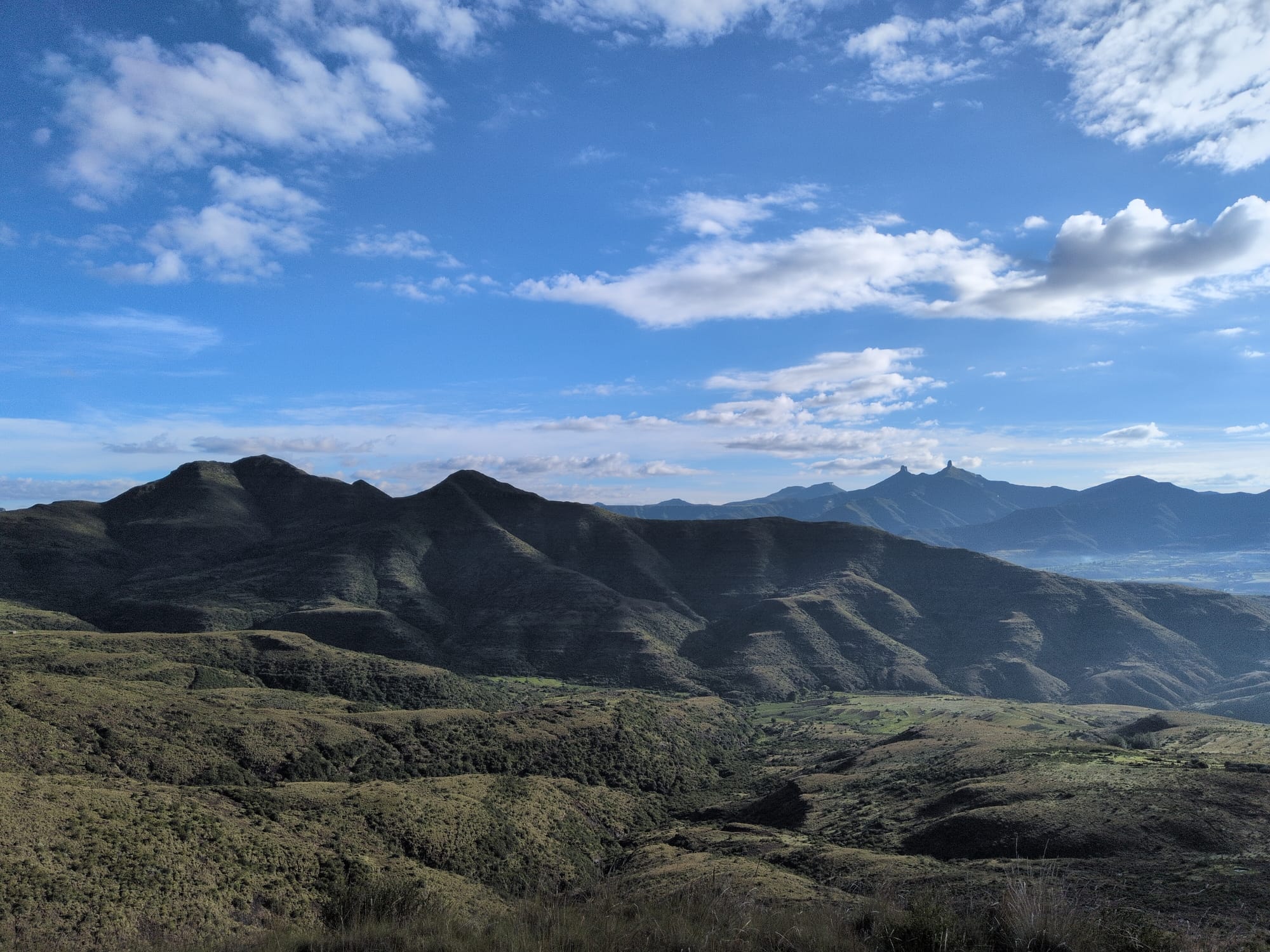
Photos of the excellent natural world around my site
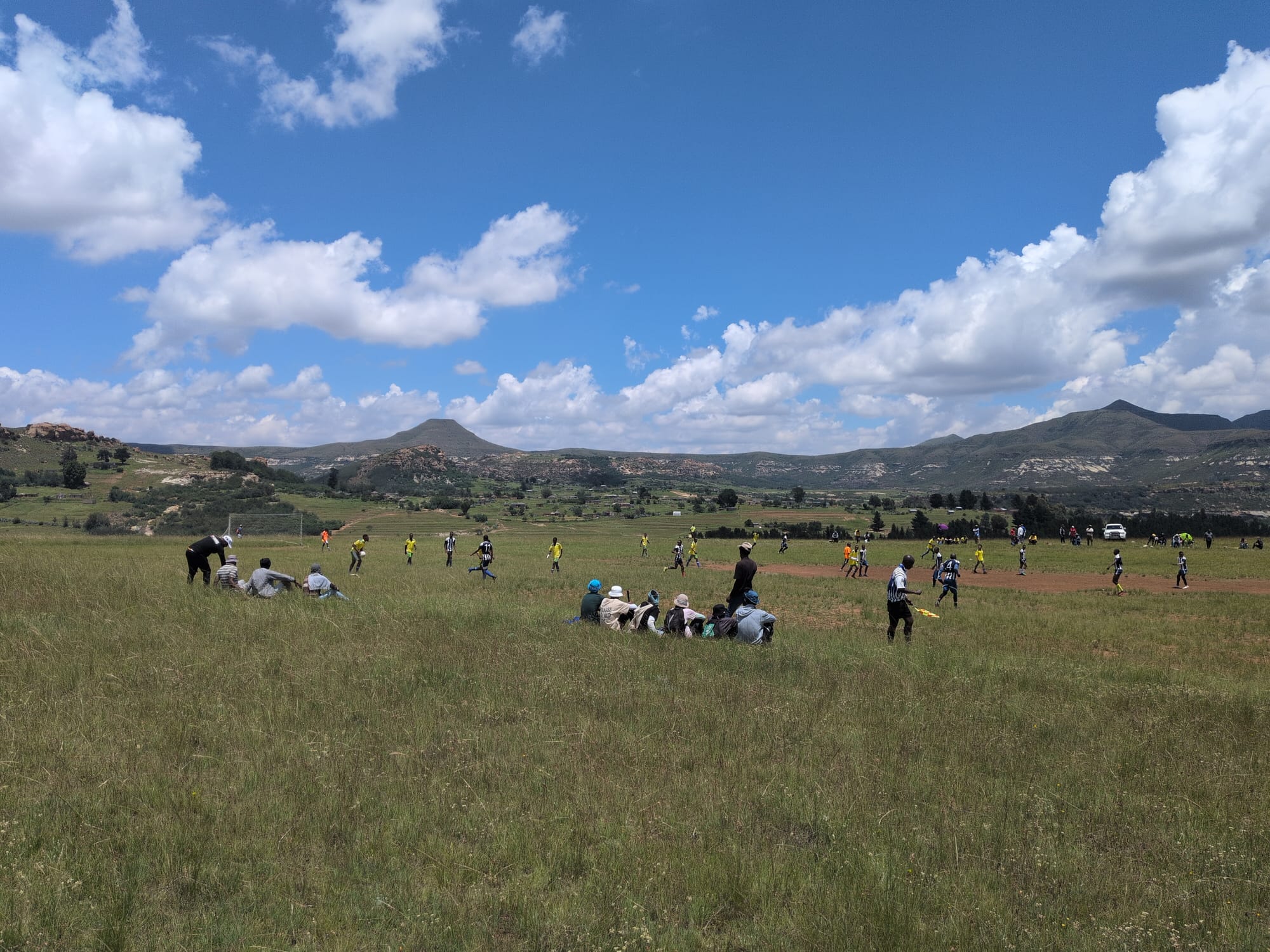
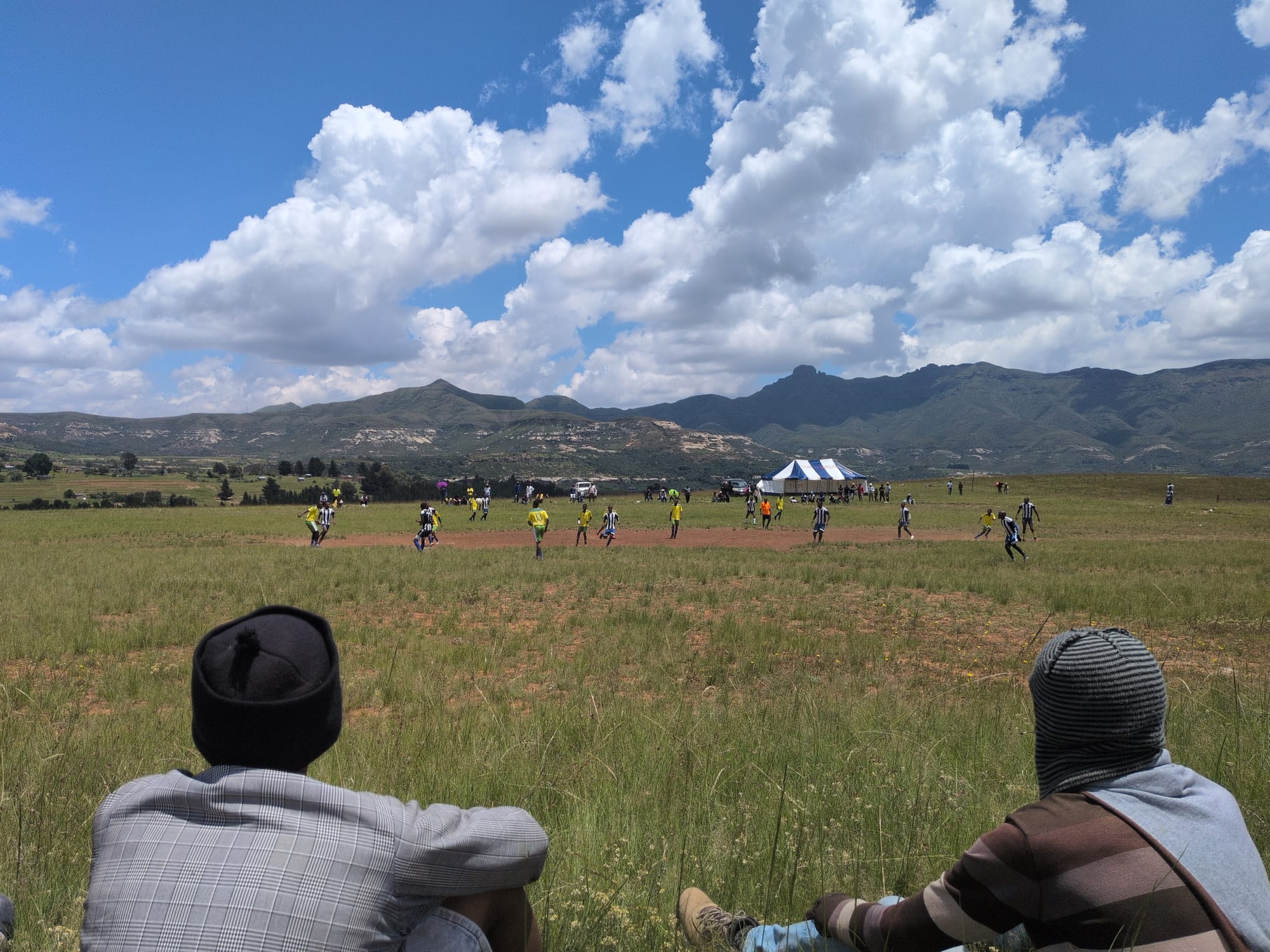
A Christmas morning soccer match at neighboring village
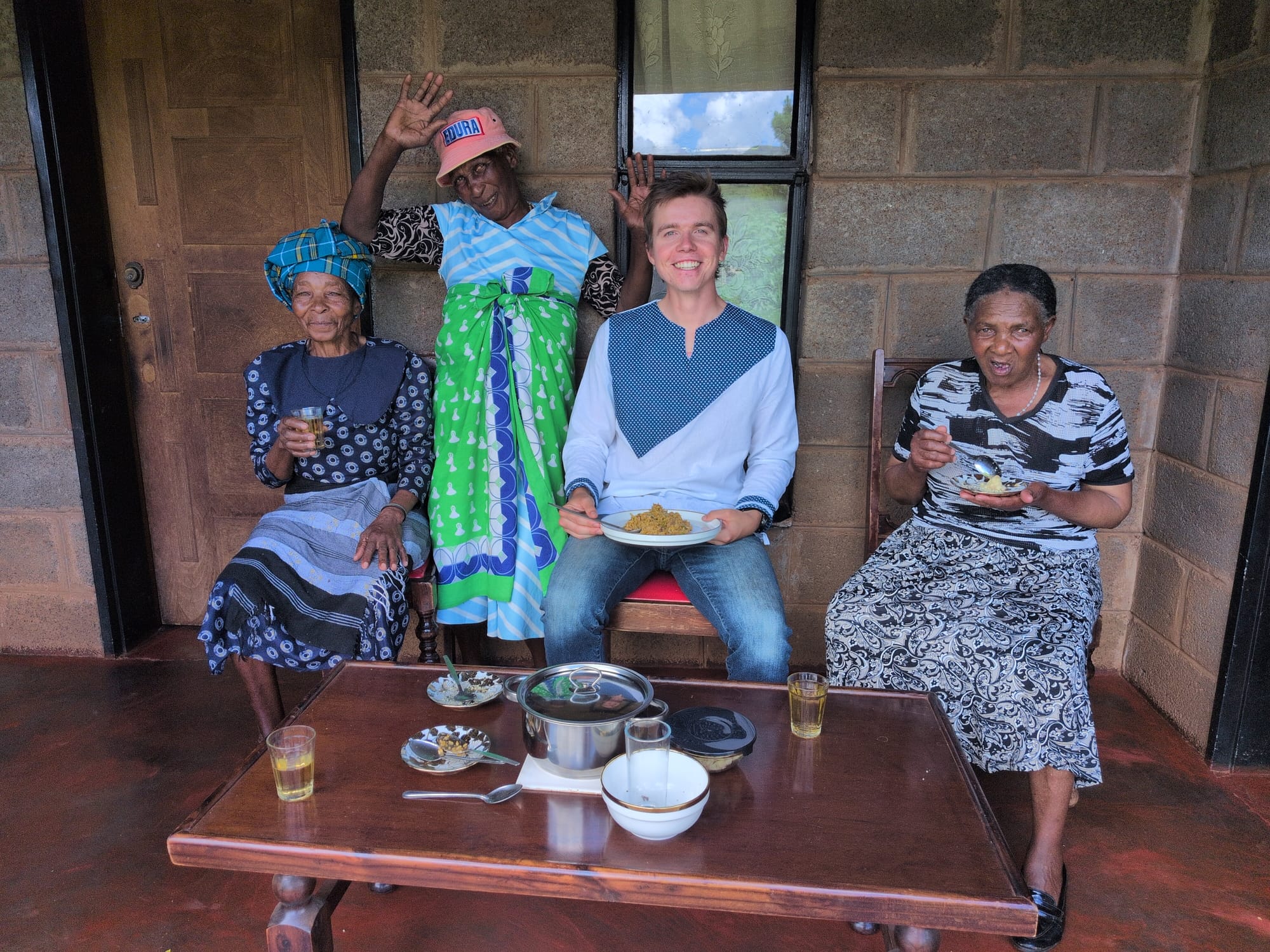
Me and my 'Me (rightmost) plus neighbors (left side) share food on Christmas day
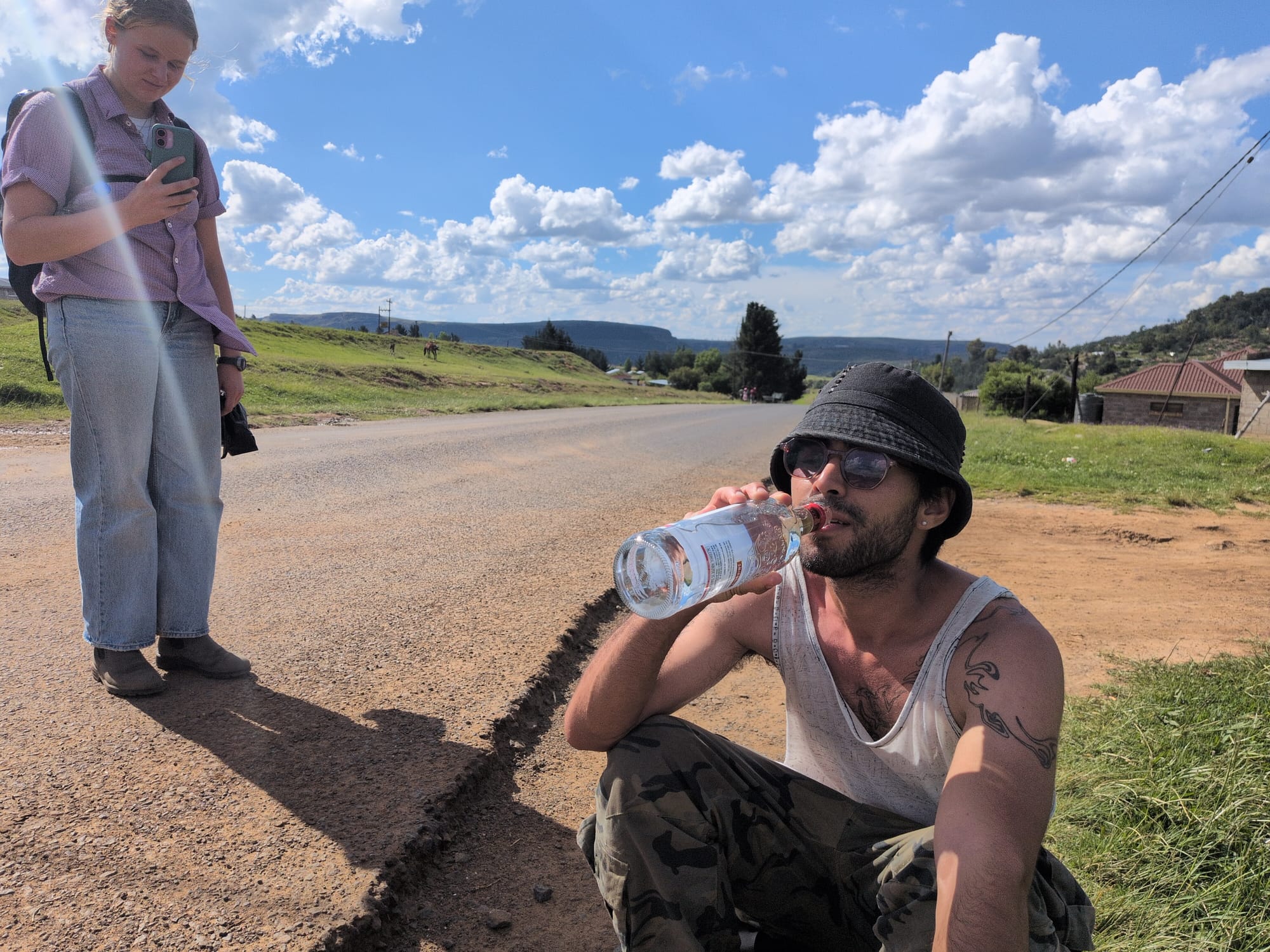
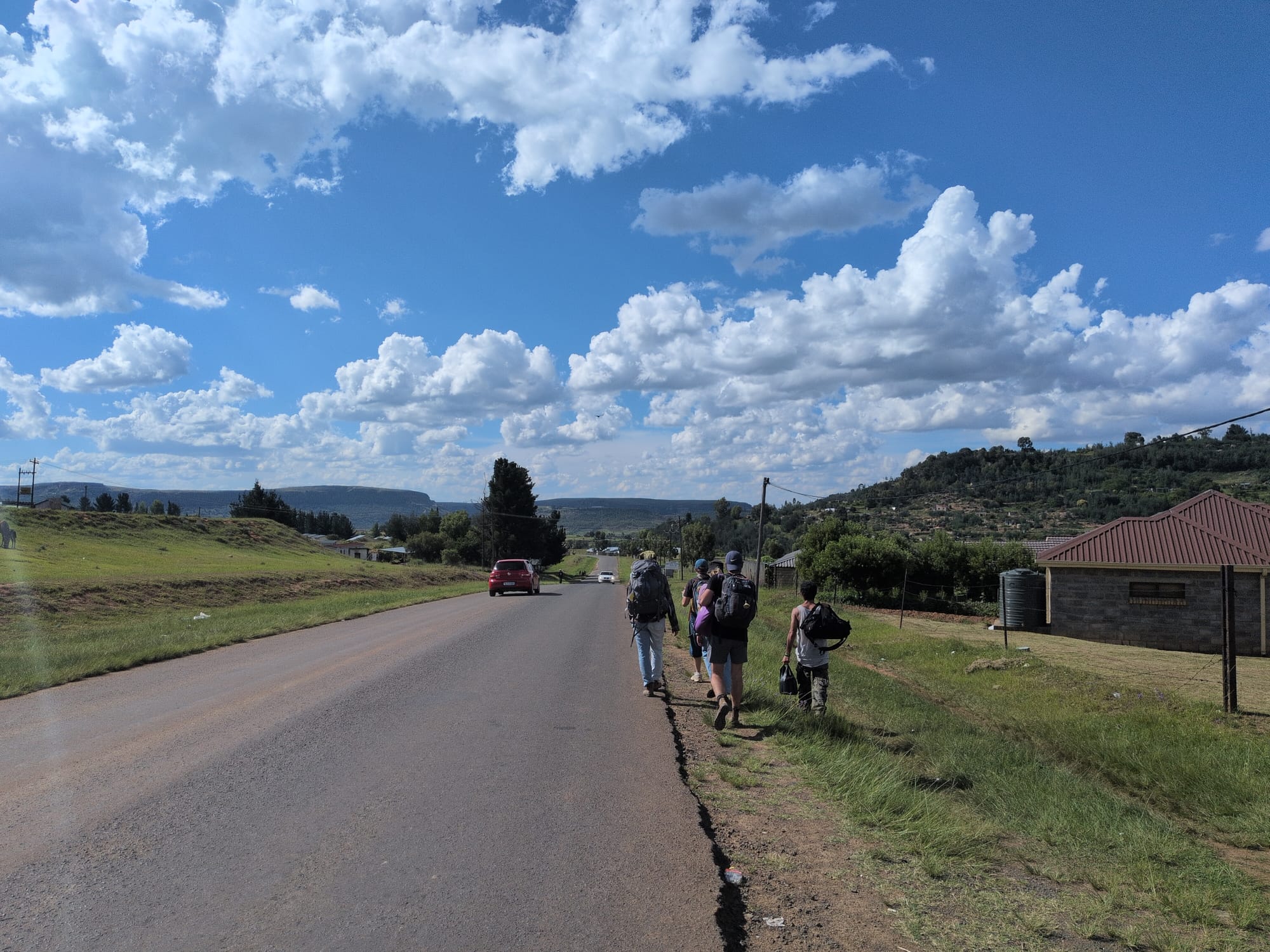
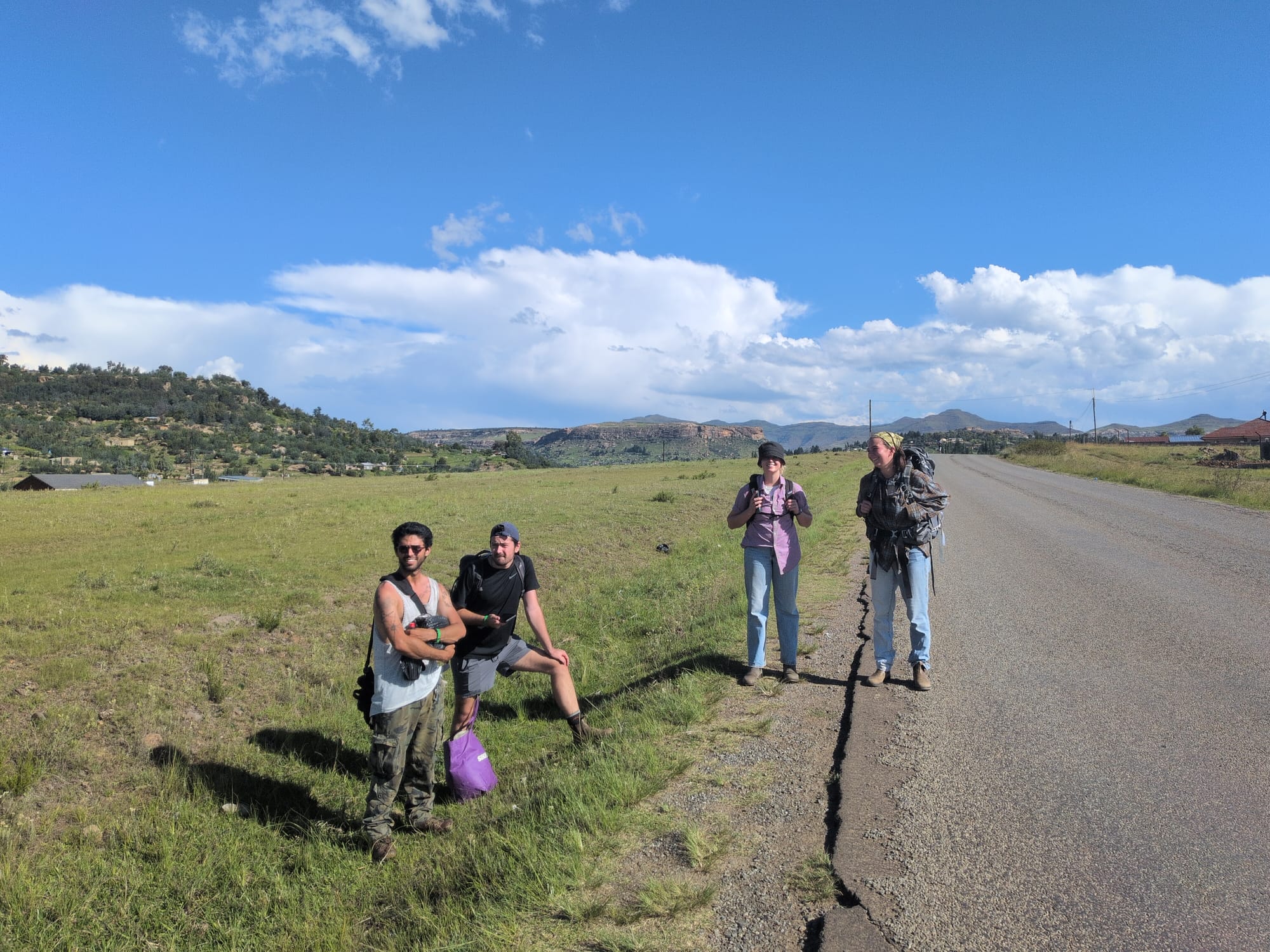
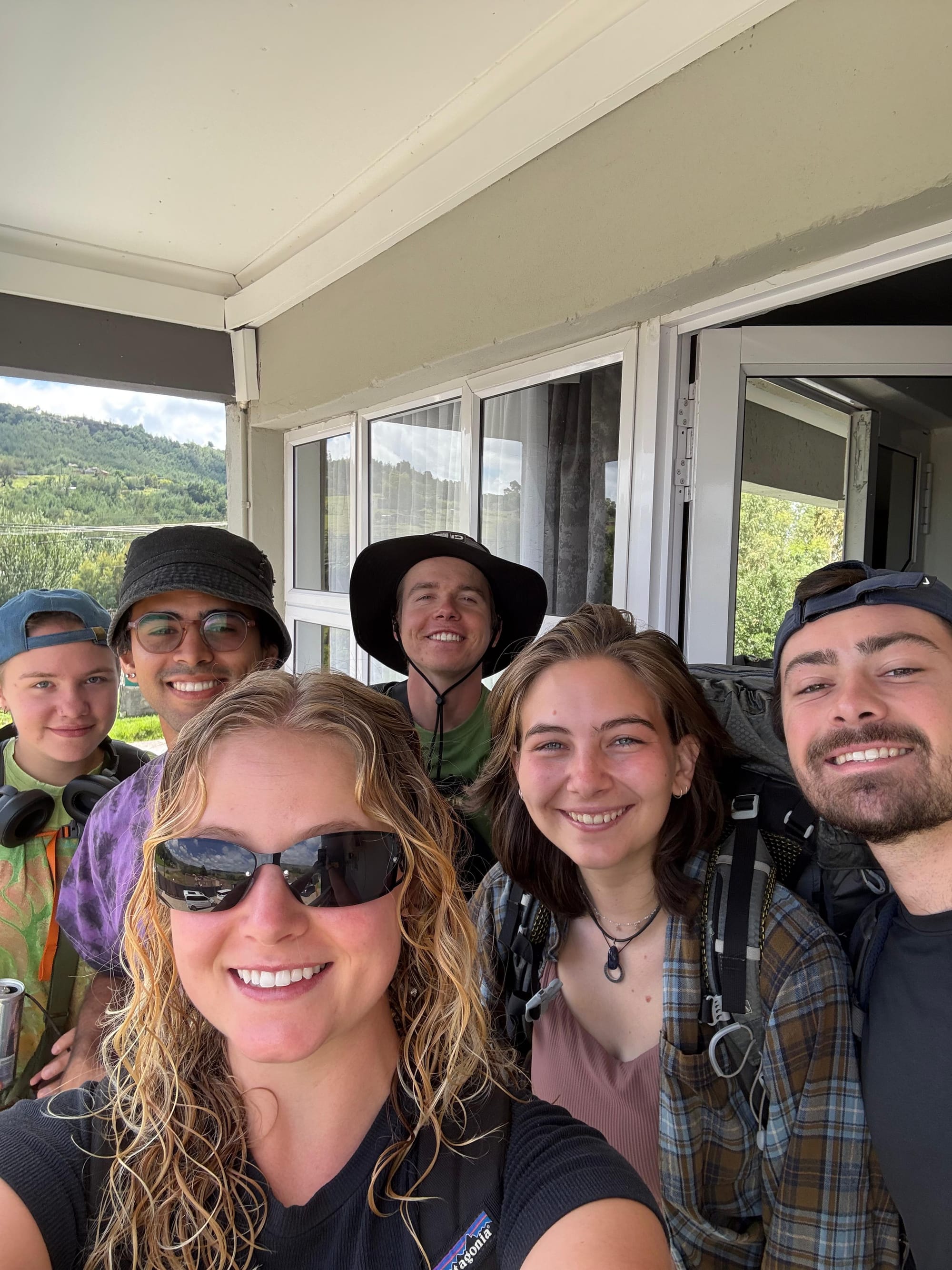
Photos from meetup with volunteer friends
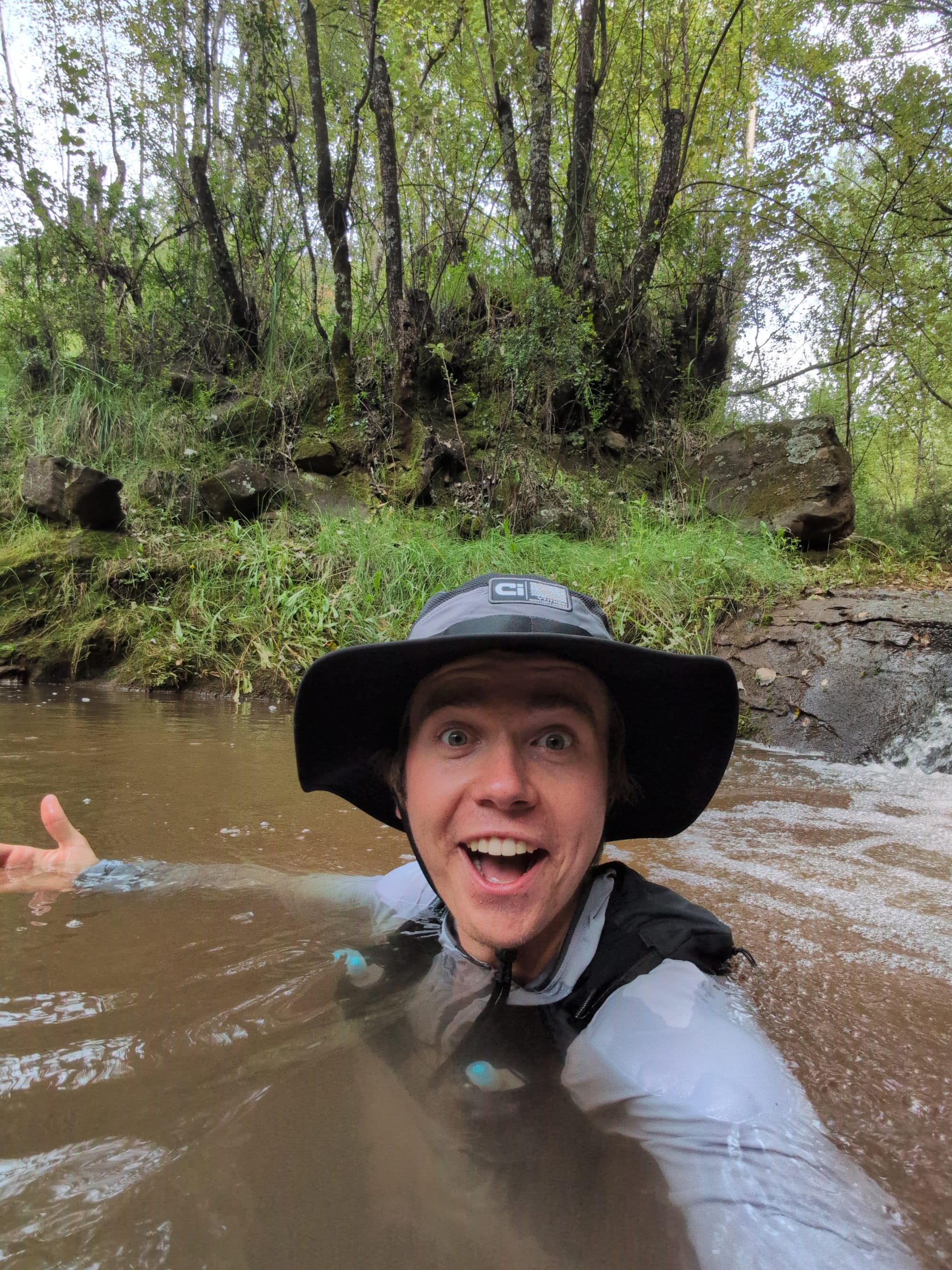
Found a swimming hole on the river behind my site
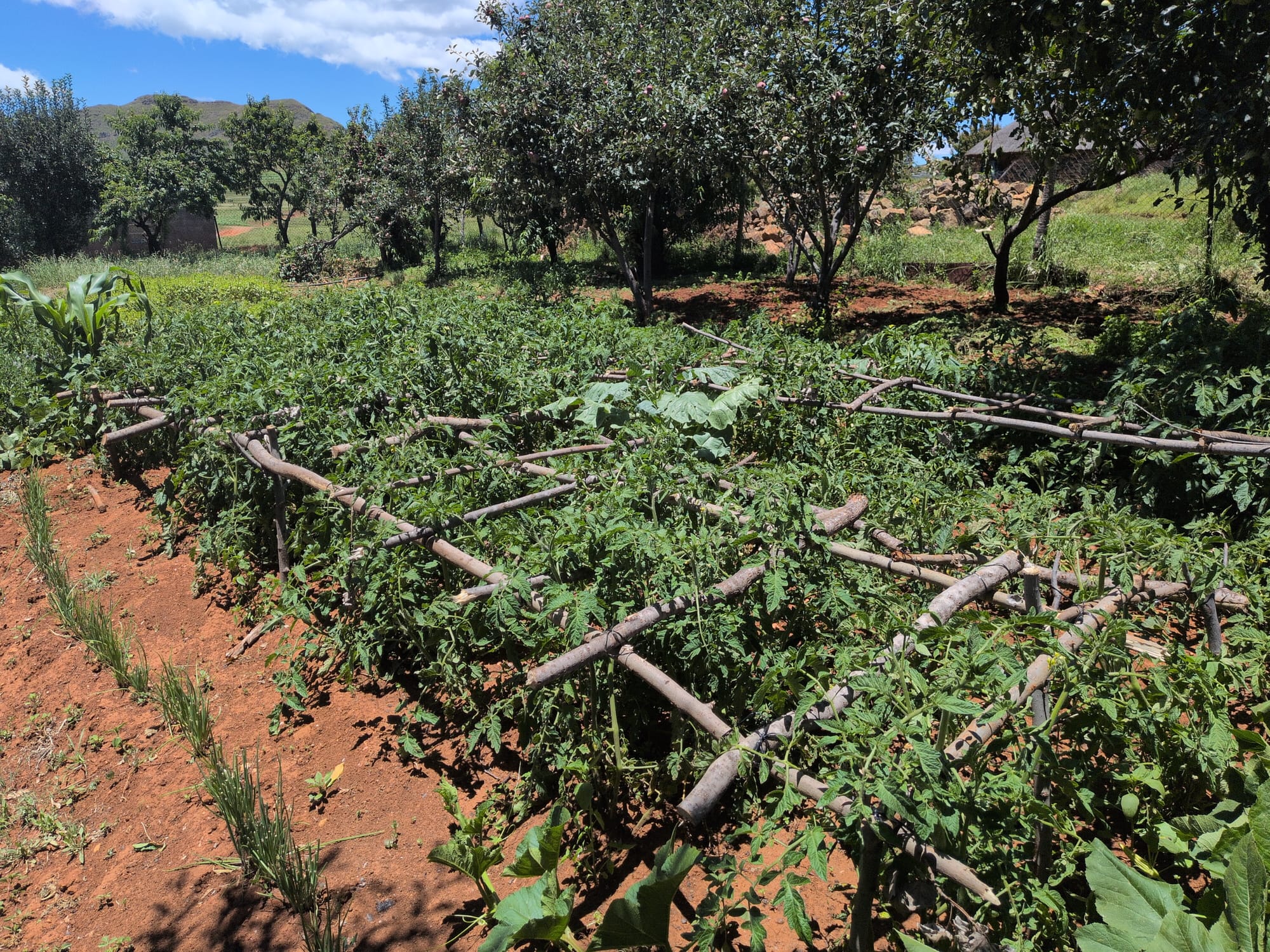
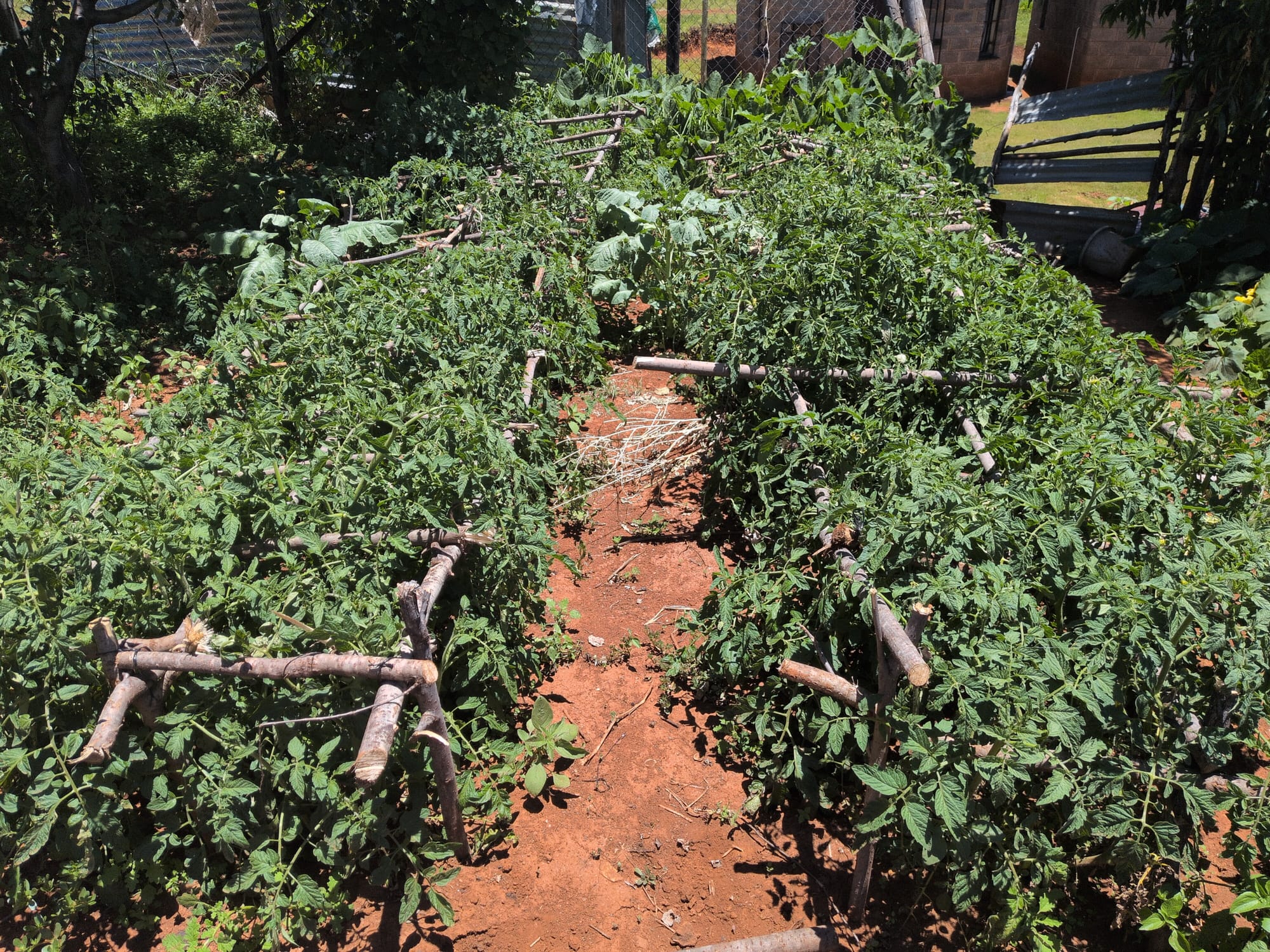
My 'Me made this trellis for her garden. Very cool.
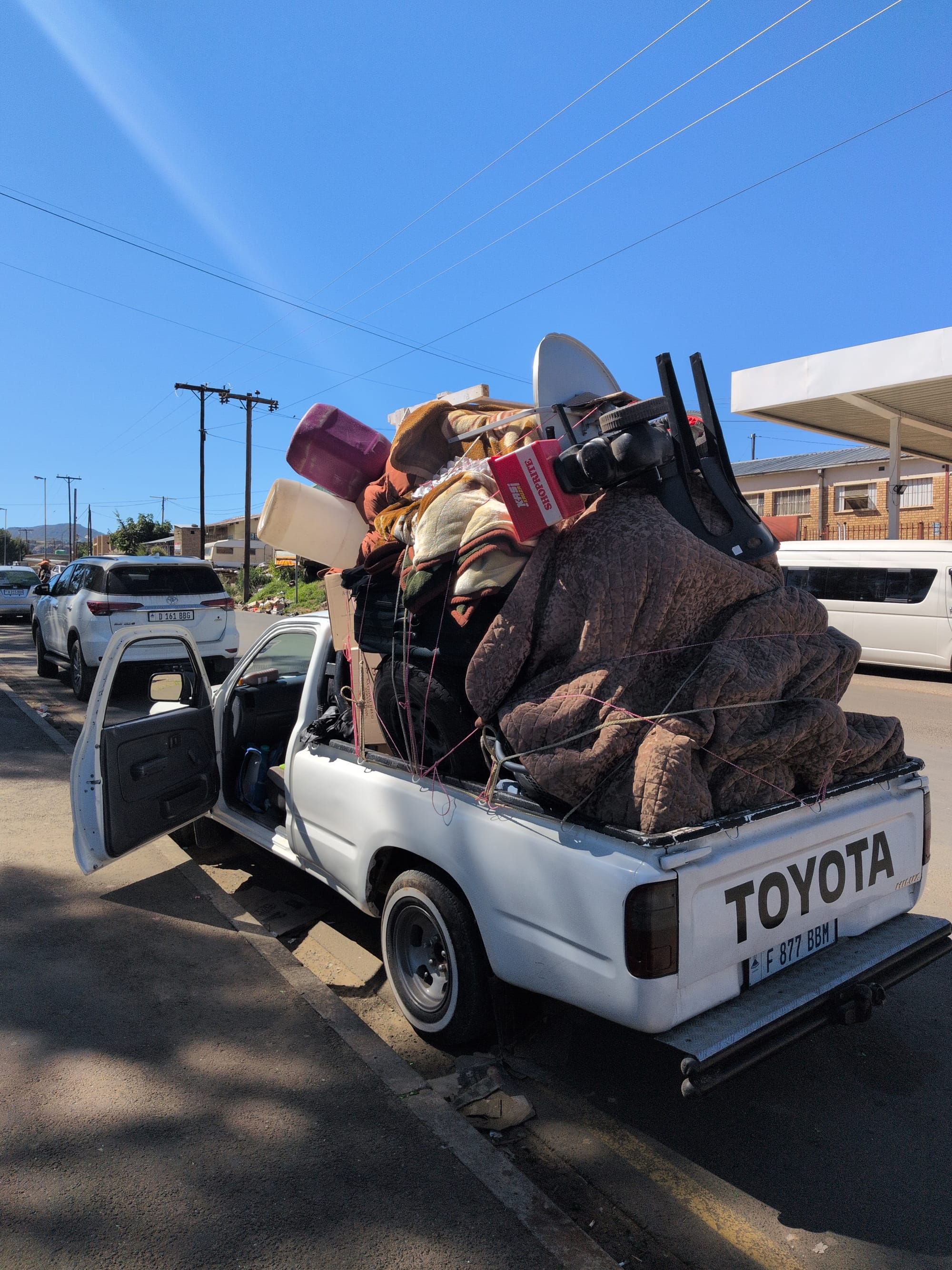
A loaded down truck in Roma, my camp town
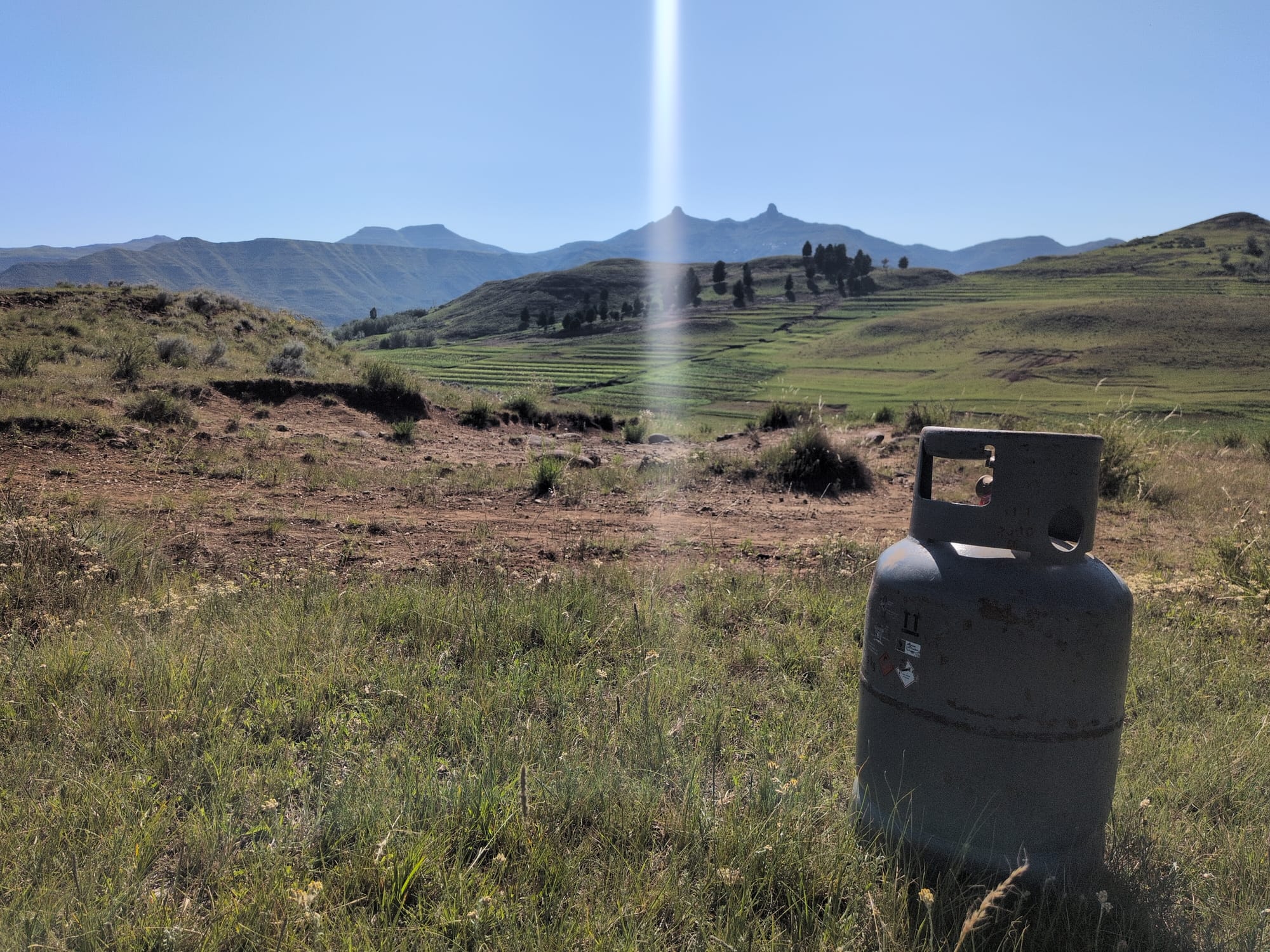
Photo of the trail on my journey to refill my gas tank